
Oil on canvas Signed 53 x 106 cm
Oil on canvas Signed 53 x 106 cm
Oil on canvas Signed 53 x 106 cm
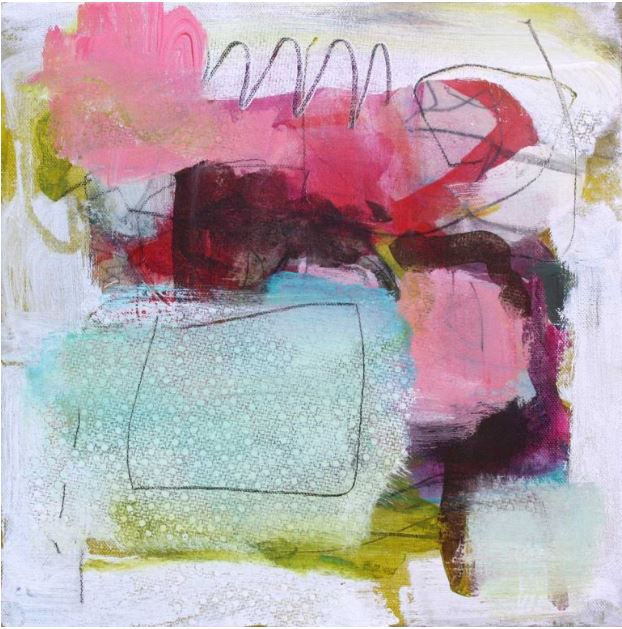
Acrylic on canvas 30.5 x 30.5 cm
Acrylic on canvas 30.5 x 30.5 cm
Acrylic on canvas 30.5 x 30.5 cm
Acrylic on canvas 30.5 x 30.5 cm
Acrylic on canvas 30.5 x 30.5 cm
Oil on canvas Signed 53 x 106 cm

Oil on Canvas 47.6 x 48.3 cm
Oil on Canvas 47.6 x 48.3 cm

Gouache on Paper 75 x 55 cm

Gouache on Paper 75 x 55 cm
Gouache on Paper 75 x 55 cm
Gouache on Paper 75 x 55 cm

Acrylic on Canvas 91.4 cm x 61 cm Signed lower right; titled and dated verso; unframed
Acrylic on Canvas 91.4 cm x 61 cm Signed lower right; titled and dated verso; unframed
Acrylic on Canvas 91.4 cm x 61 cm Signed lower right; titled and dated verso; unframed
Acrylic on Canvas 91.4 cm x 61 cm Signed lower right; titled and dated verso; unframed

Acrylic on Canvas 91.4 cm x 61 cm Dated 1996 Signed lower right, Titled and dated verso, Unframed
Northwest Coast
Inuit Sculpture Artist Unknown

Sedna Soapstone
Sedna Soapstone

High Fired Pottery 27.5 cm x 18.7 cm x 18.7 cm

Acrylic Painted Skull 44 cm x 20 cm

Oil on canvas Signed; Numbered 12-06 76 x 58 cm
Oil on canvas Signed; Numbered 12-06 76 x 58 cm
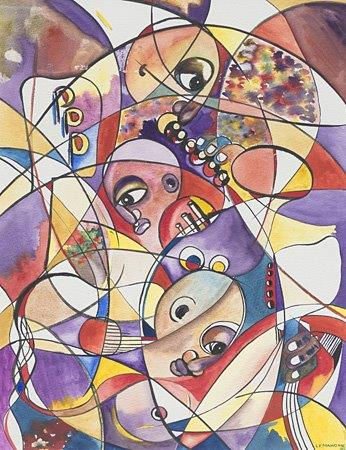
Watercolor Signed Dated 1993 36 x 28cm
Watercolor Signed Dated 1993 36 x 28cm
Watercolor Signed Dated 1993 36 x 28cm
Watercolor Signed Dated 1993 36 x 28cm

Rosewood Tables 78 cm x 150 cm x 54.5 cm
Rosewood Tables 78 cm x 150 cm x 54.5 cm
Rosewood Tables 78 cm x 150 cm x 54.5 cm
Rosewood Tables 78 cm x 150 cm x 54.5 cm
Rosewood Tables 78 cm x 150 cm x 54.5 cm
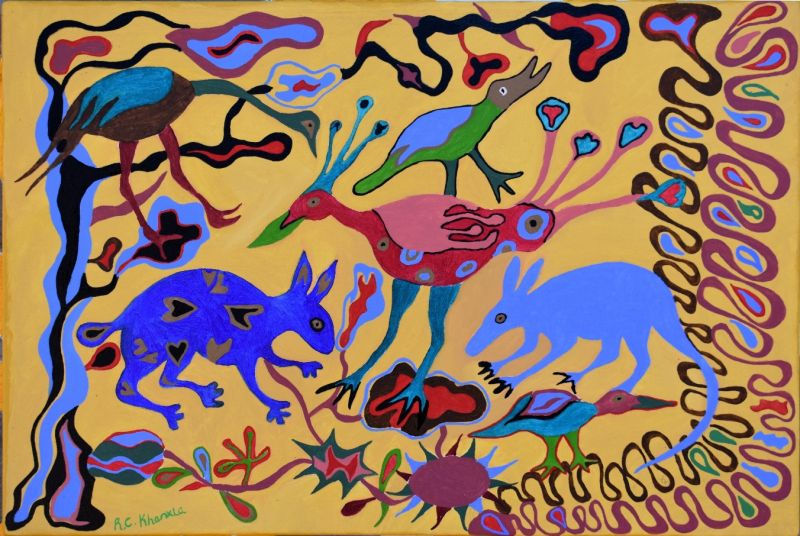
Oil on canvas 57.2 x 85.5 cm

Oil on Board Signed Dated 1962 90 cm x 65 cm
Oil on Board Signed Dated 1962 90 cm x 65 cm

Coloured pencil on paper 24.1 x 18.4 cm 2015
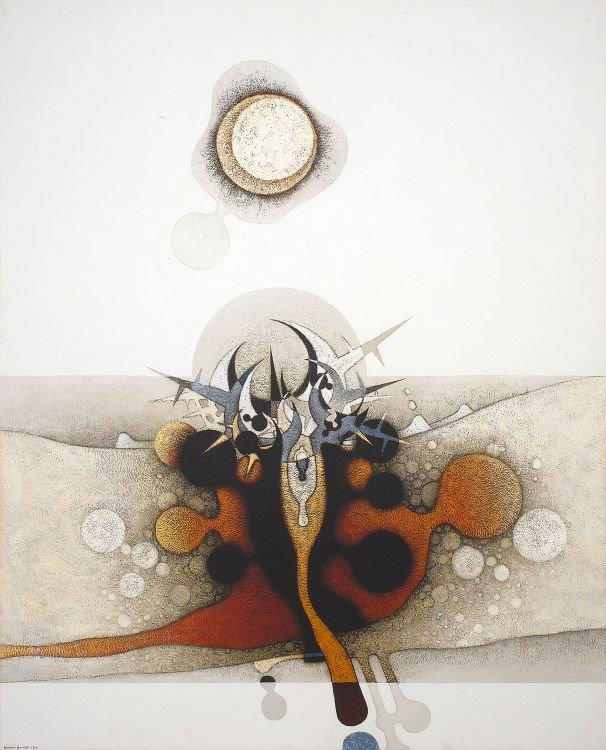
Sunburst Mixed Media on Board 122.5 x 99 cm
Sunburst Mixed Media on Board 122.5 x 99 cm
Bobbie Burgers
Bobbie Burgers is a contemporary Canadian painter. Her lush and Expressionistic depictions of flowers teeter on the verge of abstraction, bursting with bright color and laden with thickly applied, textural paint. “Flowers, to me, are the opposite of still,” the artist has explained. “Changing from minute to minute, they are perfect symbols for life, death, yearning, and beauty. My brushstrokes are layered with my own internal charges, depicting anger, frustration, softness, wanting, and more.” Born in 1973 in Vancouver, Canada, she studied Art History at the University of Victoria in British Columbia. Her work has been exhibited widely at home and abroad, notably including Art Market San Francisco and Equinox Gallery. Today, her works are in the collections of the Berost Corporation in Toronto and the Royal Bank of Canada, among others. Burgers lives and works in Vancouver, Canada.
Bobbie Burgers
Bobbie Burgers is a contemporary Canadian painter. Her lush and Expressionistic depictions of flowers teeter on the verge of abstraction, bursting with bright color and laden with thickly applied, textural paint. “Flowers, to me, are the opposite of still,” the artist has explained. “Changing from minute to minute, they are perfect symbols for life, death, yearning, and beauty. My brushstrokes are layered with my own internal charges, depicting anger, frustration, softness, wanting, and more.” Born in 1973 in Vancouver, Canada, she studied Art History at the University of Victoria in British Columbia. Her work has been exhibited widely at home and abroad, notably including Art Market San Francisco and Equinox Gallery. Today, her works are in the collections of the Berost Corporation in Toronto and the Royal Bank of Canada, among others. Burgers lives and works in Vancouver, Canada.
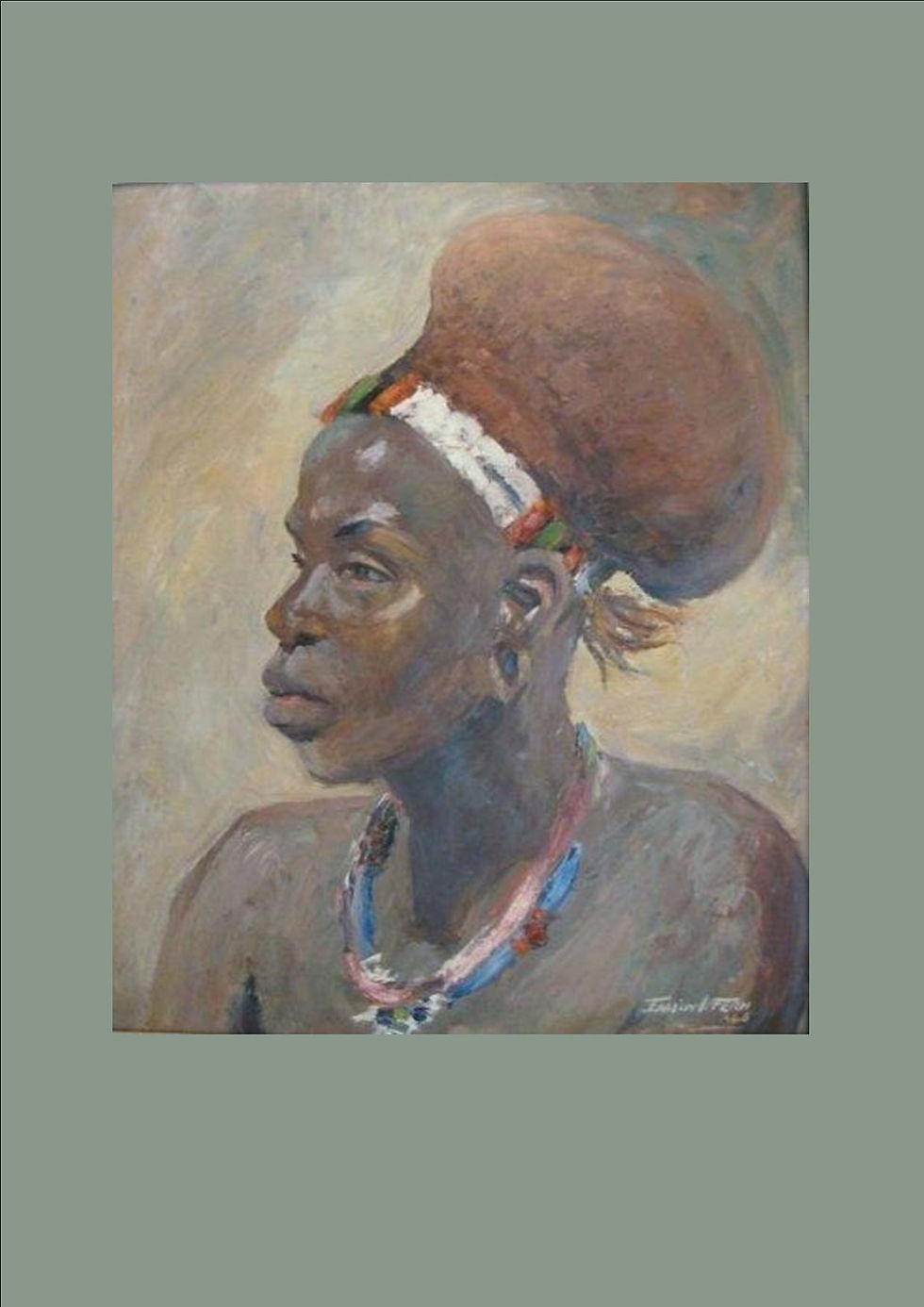
Oil on canvas Signed 32 x 39 cm
Oil on canvas Signed 32 x 39 cm

Oil on board 44 cm x 45 cm
Oil on board 44 cm x 45 cm

Oil on Canvas Dated 2012 75 cm x 57cm
Oil on Canvas Dated 2012 75 cm x 57cm

Oil Signed .Titled 88 x 120 cm
Oil Signed .Titled 88 x 120 cm

Mixed Media and Collage on canvas Signed Dated 16 163 cm x 160 cm
Mixed Media and Collage on canvas Signed Dated 16 163 cm x 160 cm
Mixed Media and Collage on canvas Signed Dated 16 163 cm x 160 cm

Oil on canvas Signed 53 x 106 cm

Acrylic on Board Signed 44 cm x 40 cm
Acrylic on Board Signed 44 cm x 40 cm

Colour Pencil on Paper Signed 16 cm x 11 cm
High Fired Pottery 27.5 cm x 18.7 cm x 18.7 cm

Signed Oil 24 cm x 35 cm
Contemporary South African Art
Welz, Jean Max Friedrich
Esmé Berman (1996:494) describes Jean Welz’s career as “a solitary adventure, unrelated to surrounding trends and fashions. There is nothing of Africa imprinted on his paintings, there is little that is truly modern, even in his abstract style. It is the delicate balance between reason and emotion, the impeccable technique and the additives of sensitivity and meditative insight which permitted him to pursue a path outside the main line of SA artistic development and yet retain widespread regard as one of the country’s most distinguished artists.”
Welz’s approach to his art is best reflected in a letter he had written to his brother, a gallery owner in Salzburg, before an exhibition there in 1965. He explained that his paintings were “documents of his soul” and said that his objective was to create “painterly poems”.
Hans (Jean) Max Friedrich Welz was born in Salzburg, Austria, one of five children, to a Roman Catholic family in 1900. His family was the fourth generation Welzes owning a framing and gilding workshop in Salzburg. He graduated from the Realschule secondary school and moved to Vienna to study architecture at the Academy of Applied Arts under Josef Hoffman at the start of the First World War. Although Austria suffered greatly during the war, it was a period when the arts, philosophy and the field of architecture flourished.
Welz was interested in art and music from an early age, becoming skilled in the family business of framing and gilding, and learning to play the violin. At the family workshop Welz came into contact with a number of Vienna’s renowned artists, art collectors and architects. He also enrolled for a course on art education for children while studying architecture (Miles, 1997).
On completion of his studies in 1921, Welz began a two-year apprenticeship at the firm of Hoffman, working under Josef Fellerer. In 1925 he travelled to Paris in order to oversee the construction of a pavilion that was designed by his friend and colleague, Oskar Härtel. Welz remained in Paris thereafter, working as a draughtsman under the radical architect Adolf Loos, and was influenced by the work of Le Corbusier (who had also studied under Hoffman for a period). He worked with Loos on the construction of Tristan Tzara’s house in Paris, among other projects - remaining in Paris for twelve years and changing his name from Hans to ‘Jean’ (Miles, 1997:18). In Paris, Welz regularly came into contact with various artists and architects; he visited the Louvre often and attended an important exhibition of Pablo Picasso’s work – which had a profound influence on his later career.
With economic hardships in Europe worsening in the 1930s, and threats of a Second World War, Welz sought to emigrate from Europe – something that was not uncommon at the time. There was little employment available to him in France, as he was not a permanent resident there, and few possibilities existed in Austria or elsewhere in Europe. The threat of German fascism was widely discussed by Welz and his circle of artist friends; he and his wife Inger began to consider options for emigration, and South Africa was the most affordable trip. Inger placed the following advertisement in The Star for her husband: “Gifted Austrian architect. Aged 36. Looking for architectural work” (Miles, 1997). They quickly began receiving offers, and his friend Le Corbusier assisted by writing him a letter of recommendation, addressed to the University of the Witwaterstrand’s Department of Architecture (Miles, 1997).
Welz moved to South Africa in 1937, taking up employment in Johannesburg where his family would join him later that year. He started as a draughtsman in the Cook and Cohen firm, later moving to Emley and Williamson. Although there was no work available for him at the University of the Witwaterstrand, the letter from Le Corbusier did serve as an introduction for Welz to meet the lecturers at the Department of Architecture. In 1937 he was asked to write the foreword for the Congress on Abstract Art held by the Department of Architecture in April – the piece was titled “Abstraction” and illustrated Welz’s familiarity with art history and contemporary art, as well as his opinions on abstraction (Miles, 1997:25).
In 1939 Welz was diagnosed with tuberculosis and admitted to the Springkell Sanatorium at Modderfontein. He had to resign from his job at Emley and Williamson, and became limited in what he could do. At the time, there was no medication for the illness, and patients had to confront their suffering in isolation. The approaching Second World War and the fear of internment due to his Austrian citizenship led to additional strain in Welz’s life (Miles, 1997:27). During this period, restricted to the space of the hospital, Welz began to carry out a number of sketches of the surrounding Highveld. His family was forced to move closer to the hospital in order to be able to visit him, and they lived on a stipend and rations from the King George VIFund. After Welz was discharged from the hospital, and with the assistance of some friends and the niece of Hugo Naudé, they were offered a home in Tradouw Pass in the Klein Karoo at very low rent – where Welz could recuperate and continue his drawing. There he began to recover, and his wife opened a tea room for passing travellers, many of whom befriended the Welzes and bought Welz’s works.
In 1940, at the 21st exhibition of the South African Academy in Johannesburg, nine of Welz’s works were exhibited. He had submitted the works while he was still in hospital. After his illness he began to draw and paint full-time, exhibiting in a total of eight exhibitions of the South African Academy between 1940 and 1950.
At their home in Tradouw Pass, Welz met AC Bouman, then a lecturer at the University of Stellenbosch and author of Art in South Africa, who was impressed by the artist and immediately showed his work to Cecil Higgs and Hugo Naudé. On a trip to Stellenbosch to have his work assessed by Bouman, Inger arranged for Jean to stop over in Worcester and spend time with Naudé; the visit lasted a week and the two discussed Welz’s possible move to De Wet. This would be the last time Welz would see his friend, as Naudé passed away suddenly in April 1941. In 1942 the Welzes moved from Tradouw Pass to a cottage in De Wet, and it was during this period that Welz began to establish himself as a professional artist. In 1942 he had his first solo exhibition at the Argus Gallery in Cape Town. Following this, he was approached by Gregoire Boonzaier to join the New Group, and he exhibited with them in September of the same year.
After Naudé’s death, and due to their affinities, the Welzes were asked by members of the Hugo Naudé Society to assist in the restoration of his home and his work. From 1943 until 1948, Welz acted as curator of Naudé’s work and ran the Hugo Naudé Art Centre in Worcester. At the Centre he gave lectures on art and taught art classes for the youth, recalling his subjects taken in Vienna and the influence of his professor of art education, Franz Cizek (Miles, 1997:15). The Welz family stayed in the Naudé house rent-free during this period.
During his time in Worcester, Welz produced a number of highly acclaimed works. It was a period when he had a stable income and regular contact with artists of the New Group. In 1947 he was awarded the Silver Medal for a pastel he submitted to an exhibition of the South African Academy. In 1948 he was granted South African citizenship and began designing a family home and studio at 5 Bosman Street, Worcester. The Welz family was finally able to move into their own home in 1949.
Although Welz’s interest in art was cultivated from a young age, he was a self-taught artist. Elza Miles (2000:32) quotes Welz writing about beginning to paint in 1940: “But, when all of a sudden I became a painter I had the advantage of the intellectual maturity of a man of forty. I then had to begin, alone, in the stillness of the Karoo, without a teacher, without an art school and without books, to find a justification for each of my brushstrokes.” His various relocations to the Karoo and to Tradouw Pass, De Wet and Worcester exposed him to the South African landscape, which was reflected in his work. Elza Miles (1997:8) writes: “When, in the early forties, he first depicted scenes in the Little Karoo, he was struck and enchanted by the way in which the glaring sun bleached the colours of his surroundings. To convey this he developed a particular method whereby he layered and fused his powdery pastel colours. He later transferred this pastel effect into oils, and it is this technique which became intrinsic to Welz’s artistic vision.”
Welz revered the works of Naudé and JEA Volschenck, and had been deeply influenced by the work of Picasso and Cézanne. He often went back and reworked canvases numerous times, repainting his still life ‘Baroque’ a total of 25 times (Miles, 1997:8). In the 1950’s and 1960’s, his work moved towards greater abstraction, establishing a technique that would distinguish his work. In 1954 he had a successful solo exhibition in the Constantia Gallery in Johannesburg. According to Miles (1997:8), “From the early fifties until the late sixties Welz’s work became more expressive and his palette heightened […] The symbolic undertones in his earlier work became more evident […] He purposefully used the ambiguity of line and shape so that unexpected forms emerge as shadowy presences and create a tension between what is fore- and what is background.”
Welz’s poetic vision for his work required a unique style and technique to accurately communicate his philosophy of balance between intellect and intuition. His oeuvre of work developed in stages, concentrating on different subject matter such as still lifes, landscapes and nude studies, while continuously formulating and perfecting his style.
The mystical spirit of self-containment reflected in his paintings, was the result of his distinctive technique which could convey this effectively. Layers of colours were glazed or scumbled, and definitive lines as well as opaque layers were applied to focus on particular areas in order to provide contrast with the vague and misty surrounding tones.
In 1968, almost 30 years after Welz’s first diagnosis with tuberculosis, the illness reappeared. He was admitted immediately to the Brewelskloof Sanatorium and released only six months later (Miles, 1997). With his declining health and inability to manage the trip to Cape Town from Worcester as often as he would like, Welz and his family moved to Rondebosch in 1969. In the same year Welz was awarded a Medal of Honour for painting by the ‘Suid-Afrikaanse Akademie vir Wetenskap en Kuns.’ A retrospective of his work opened in August 1970 at the South African National Gallery.
Welz died on Christmas Eve at his home in Cape Town in 1975.
Reference: Bormans Fine Art

Oil on Canvas on Board Signed Dated 45 46 cm x 30.5 cm