
Oil on canvas Signed 53 x 106 cm
Oil on canvas Signed 53 x 106 cm
Oil on canvas Signed 53 x 106 cm
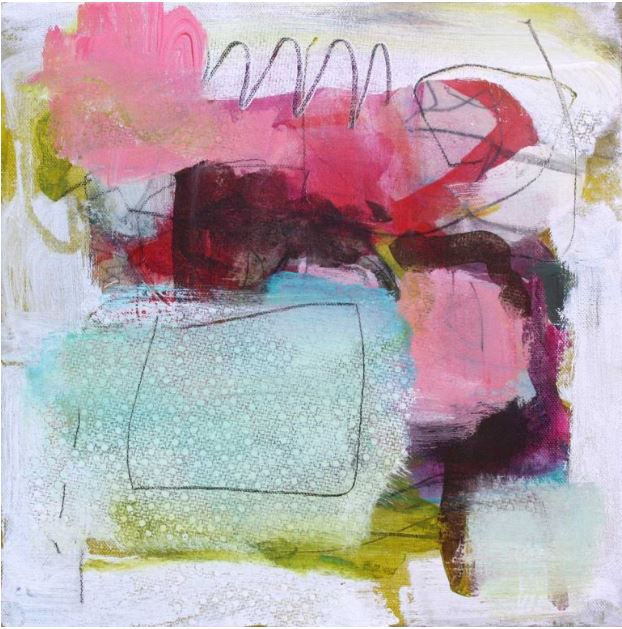
Acrylic on canvas 30.5 x 30.5 cm
Acrylic on canvas 30.5 x 30.5 cm
Acrylic on canvas 30.5 x 30.5 cm
Acrylic on canvas 30.5 x 30.5 cm
Acrylic on canvas 30.5 x 30.5 cm
Oil on canvas Signed 53 x 106 cm

Oil on Canvas 47.6 x 48.3 cm
Oil on Canvas 47.6 x 48.3 cm

Gouache on Paper 75 x 55 cm

Gouache on Paper 75 x 55 cm
Gouache on Paper 75 x 55 cm
Gouache on Paper 75 x 55 cm

Acrylic on Canvas 91.4 cm x 61 cm Signed lower right; titled and dated verso; unframed
Acrylic on Canvas 91.4 cm x 61 cm Signed lower right; titled and dated verso; unframed
Acrylic on Canvas 91.4 cm x 61 cm Signed lower right; titled and dated verso; unframed
Acrylic on Canvas 91.4 cm x 61 cm Signed lower right; titled and dated verso; unframed

Acrylic on Canvas 91.4 cm x 61 cm Dated 1996 Signed lower right, Titled and dated verso, Unframed
Northwest Coast
Inuit Sculpture Artist Unknown

Sedna Soapstone
Sedna Soapstone

High Fired Pottery 27.5 cm x 18.7 cm x 18.7 cm

Acrylic Painted Skull 44 cm x 20 cm

Oil on canvas Signed; Numbered 12-06 76 x 58 cm
Oil on canvas Signed; Numbered 12-06 76 x 58 cm
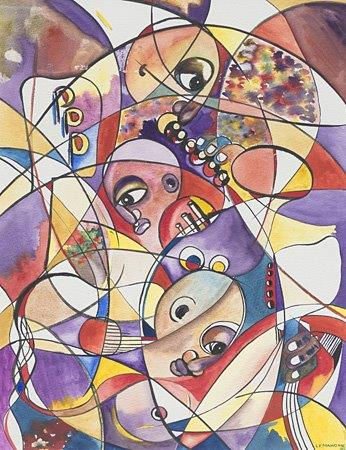
Watercolor Signed Dated 1993 36 x 28cm
Watercolor Signed Dated 1993 36 x 28cm
Watercolor Signed Dated 1993 36 x 28cm
Watercolor Signed Dated 1993 36 x 28cm

Rosewood Tables 78 cm x 150 cm x 54.5 cm
Rosewood Tables 78 cm x 150 cm x 54.5 cm
Rosewood Tables 78 cm x 150 cm x 54.5 cm
Rosewood Tables 78 cm x 150 cm x 54.5 cm
Rosewood Tables 78 cm x 150 cm x 54.5 cm
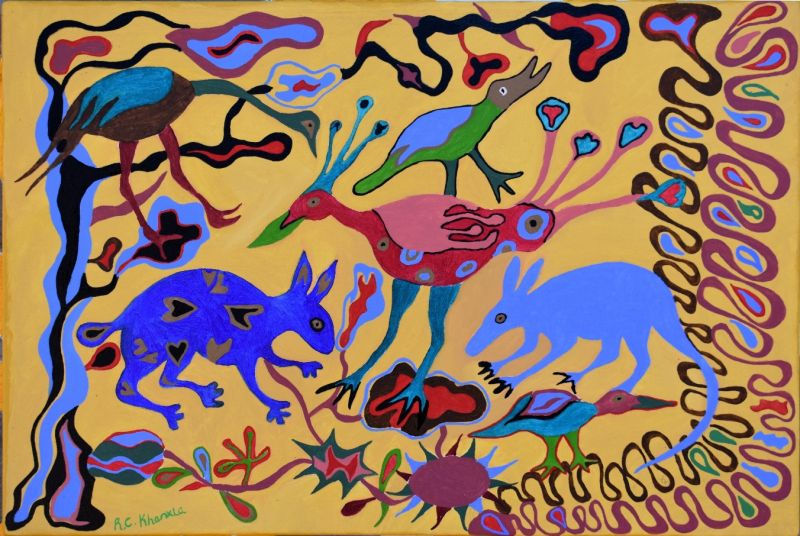
Oil on canvas 57.2 x 85.5 cm

Oil on Board Signed Dated 1962 90 cm x 65 cm
Oil on Board Signed Dated 1962 90 cm x 65 cm

Coloured pencil on paper 24.1 x 18.4 cm 2015
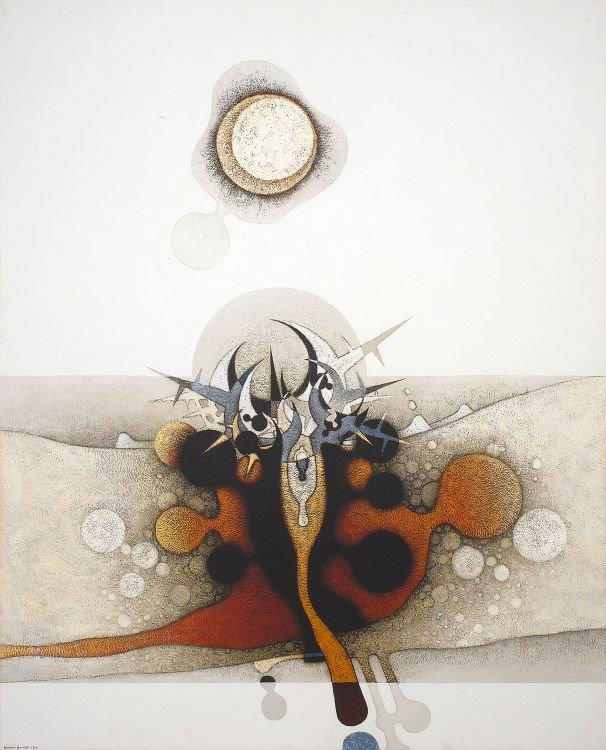
Sunburst Mixed Media on Board 122.5 x 99 cm
Sunburst Mixed Media on Board 122.5 x 99 cm
Bobbie Burgers
Bobbie Burgers is a contemporary Canadian painter. Her lush and Expressionistic depictions of flowers teeter on the verge of abstraction, bursting with bright color and laden with thickly applied, textural paint. “Flowers, to me, are the opposite of still,” the artist has explained. “Changing from minute to minute, they are perfect symbols for life, death, yearning, and beauty. My brushstrokes are layered with my own internal charges, depicting anger, frustration, softness, wanting, and more.” Born in 1973 in Vancouver, Canada, she studied Art History at the University of Victoria in British Columbia. Her work has been exhibited widely at home and abroad, notably including Art Market San Francisco and Equinox Gallery. Today, her works are in the collections of the Berost Corporation in Toronto and the Royal Bank of Canada, among others. Burgers lives and works in Vancouver, Canada.
Bobbie Burgers
Bobbie Burgers is a contemporary Canadian painter. Her lush and Expressionistic depictions of flowers teeter on the verge of abstraction, bursting with bright color and laden with thickly applied, textural paint. “Flowers, to me, are the opposite of still,” the artist has explained. “Changing from minute to minute, they are perfect symbols for life, death, yearning, and beauty. My brushstrokes are layered with my own internal charges, depicting anger, frustration, softness, wanting, and more.” Born in 1973 in Vancouver, Canada, she studied Art History at the University of Victoria in British Columbia. Her work has been exhibited widely at home and abroad, notably including Art Market San Francisco and Equinox Gallery. Today, her works are in the collections of the Berost Corporation in Toronto and the Royal Bank of Canada, among others. Burgers lives and works in Vancouver, Canada.
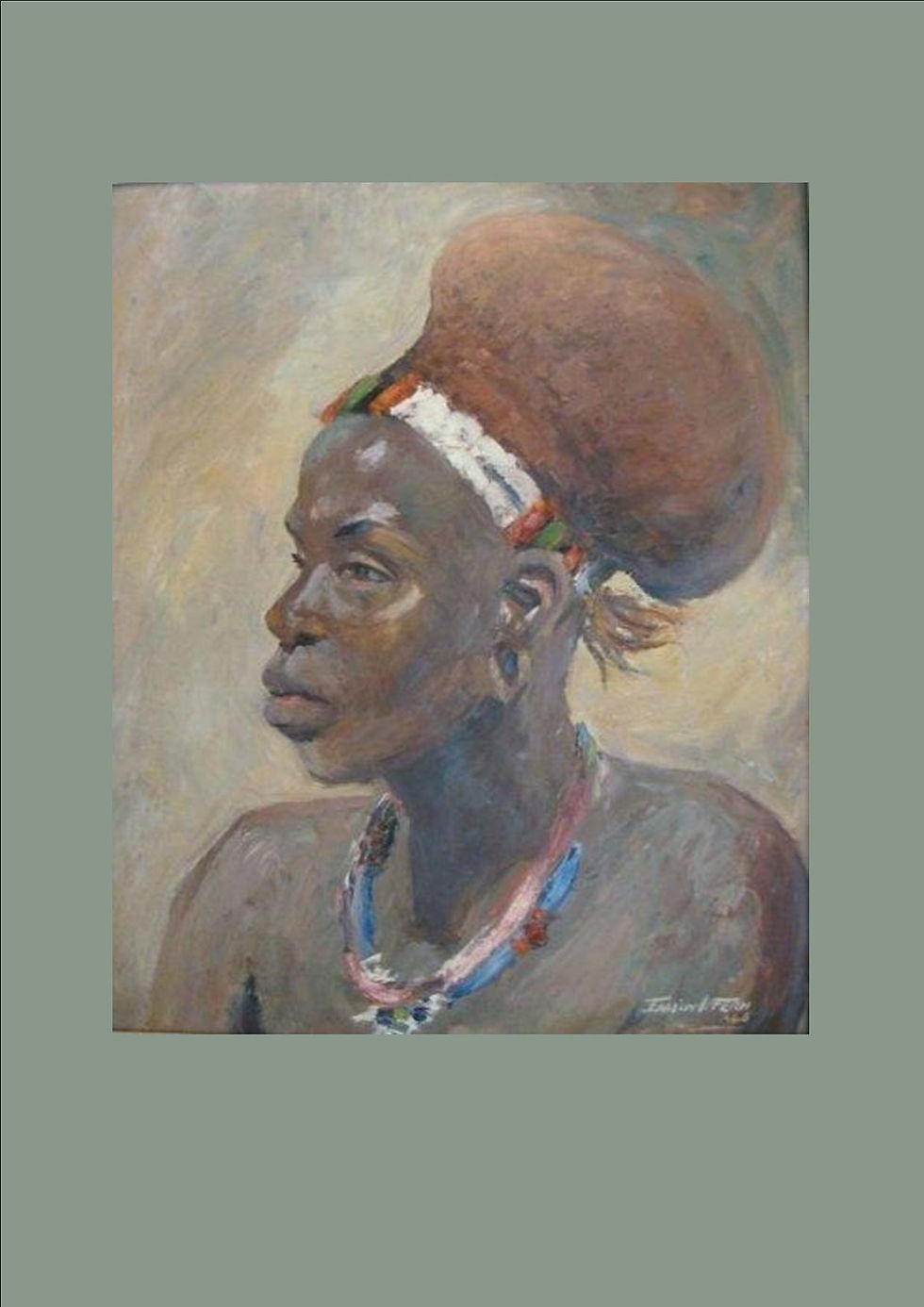
Oil on canvas Signed 32 x 39 cm
Oil on canvas Signed 32 x 39 cm

Oil on board 44 cm x 45 cm
Oil on board 44 cm x 45 cm

Oil on Canvas Dated 2012 75 cm x 57cm
Oil on Canvas Dated 2012 75 cm x 57cm

Oil Signed .Titled 88 x 120 cm
Oil Signed .Titled 88 x 120 cm

Mixed Media and Collage on canvas Signed Dated 16 163 cm x 160 cm
Mixed Media and Collage on canvas Signed Dated 16 163 cm x 160 cm
Mixed Media and Collage on canvas Signed Dated 16 163 cm x 160 cm

Oil on canvas Signed 53 x 106 cm

Acrylic on Board Signed 44 cm x 40 cm
Acrylic on Board Signed 44 cm x 40 cm

Colour Pencil on Paper Signed 16 cm x 11 cm
High Fired Pottery 27.5 cm x 18.7 cm x 18.7 cm

Signed Oil 24 cm x 35 cm
Contemporary South African Art
Mukomberanwa, Nicholas
Article credits to: Wikipedia
Nicholas Mukomberanwa (1940 - 12 November 2002) was a Zimbabwean sculptor and art teacher. He was among the most famous products of theWorkshop School at the National Gallery of Zimbabwe and an art mentor and teacher to the Mukomberanwa Family of sculptors. His work has been exhibited in galleries around the world and he remains one of Zimbabwe's most famous artists.
By the age of 17 he was accepted at St Benedicts Mission, Chiendambuya, where he was recognised as skilled in painting and drawing and so was encouraged to move to the Serima Mission, Masvingo Province. There, Father Groeber encouraged sculpting and the craft of woodcarving and Nicholas encountered a blend of traditional Christian iconography and tribal African pieces. However, after a productive year at Serima, Mukomberanwa was expelled and moved to Salisbury (now Harare), taking a job as an officer in the British South Africa Police, where he remained for 15 years (1962-76)
Nicholas was still drawing for recreation and in 1962 he met Frank McEwen, then director of the National Gallery of Rhodesia (today the National Gallery of Zimbabwe), who encouraged him to take up stone carving. McEwen provided materials and training in a workshop in the Gallery basement, and soon Mukomberanwa was sculpting in his free time, producing his first stone piece The Thief. Thanks to McEwen, the "first generation" of new Shona sculptors were given international exposure despite the sanctions being imposed on Southern Rhodesia in the period 1965-1980 and Nicholas’s work joined that from other leading members from the Workshop School such as Sylvester Mubayi, Joram Mariga and Joseph Ndandarika.
Early works by many of the first generation artists, including three by Nicolas, are now in the McEwen bequest to the British Museum. During its early years of growth, the nascent "Shona sculpture movement" was described as an art renaissance, an art phenomenon and a miracle. Critics and collectors could not understand how an art genre had developed with such vigour, spontaneity and originality in an area of Africa which had none of the great sculptural heritage of West Africa and had previously been described in terms of the visual arts as artistically barren. Mukomberanwa married his first wife, Grace, in 1965 and they had eight children.
Eventually, in a risky move, he decided to end his career with the police to become a sculptor full-time. The gambit paid off, and by the late 1970s and in the 1980s his work was being shown in many venues. He continued to hone his skills over the following decade, developing one of the most distinctive personal styles found in his generation of Zimbabwean stone sculptors.AccoladesOne of Nicholas’s works, called The Chief, was depicted on a Zimbabwean stamp issued to commemorate Commonwealth Day on 14 March 1983. It formed the $1 value in a set completed with works by Henry Munyaradzi, Joseph Ndandarika and John Takawira.
In 1986 Prime Minister, Robert Mugabe, bestowed on Nicholas a special award for his contribution to the visual arts in Zimbabwe, while in 1989 Nicholas was the overall winner in the annual Nedlaw / Baringa exhibition at the National Gallery of Zimbabwe for his piece "Street Beggar" and was chosen with Tapfuma Gutsa and Henry Munyaradzi to represent Zimbabwe in the New York exhibition "Contemporary African Artists - Changing Tradition".ExhibitionsIn June–July 1993,
Nicholas was joined by his four sons Anderson (born 1968), Malachia (born 1970), Tendai (born 1974) and Lawrence (born 1976) in presenting an exhibition of their sculpture at the Chapungu Sculpture Park, Harare. By the end of the millennium, Mukomberanwa's reputation was further enhanced by the many exhibitions in which his work was displayed. pace of his life considerably.
Mukomberanwa's sculptures showed human forms at various levels of abstraction and sometimes depicted animals, birds or spiritual feelings; most were highly polished, although in a few cases he would contrast smooth sections with areas of great roughness. He worked primarily in hard stone, using local materials such as opal stone, cobalt stone and other serpentines, especially a local variant called springstone found at Tengenenge.
Mukomberanwa died suddenly on 12 November 2002. All of his children became sculptors: his sons Anderson, Malachia, Tendai, Lawrence, and Taguma; and his daughters Netsai and Ennica. Another son, his eighth child, had tragically been drowned. Nicholas was also the uncle and teacher of Nesbert Mukomberanwa and mentor to African-American sculptor M. Scott Johnson. An appropriate quote from eldest son Anderson may serve as Nicholas’s memorial

Family Bond Statue 152 cm

#1 of 2 Images Serpentine 45.5 cm x 25.5 cm

Serpentine 45.5 cm x 25.5 cm

#1 of 2 Images Serpentine 45.5 cm x 25.5 cm
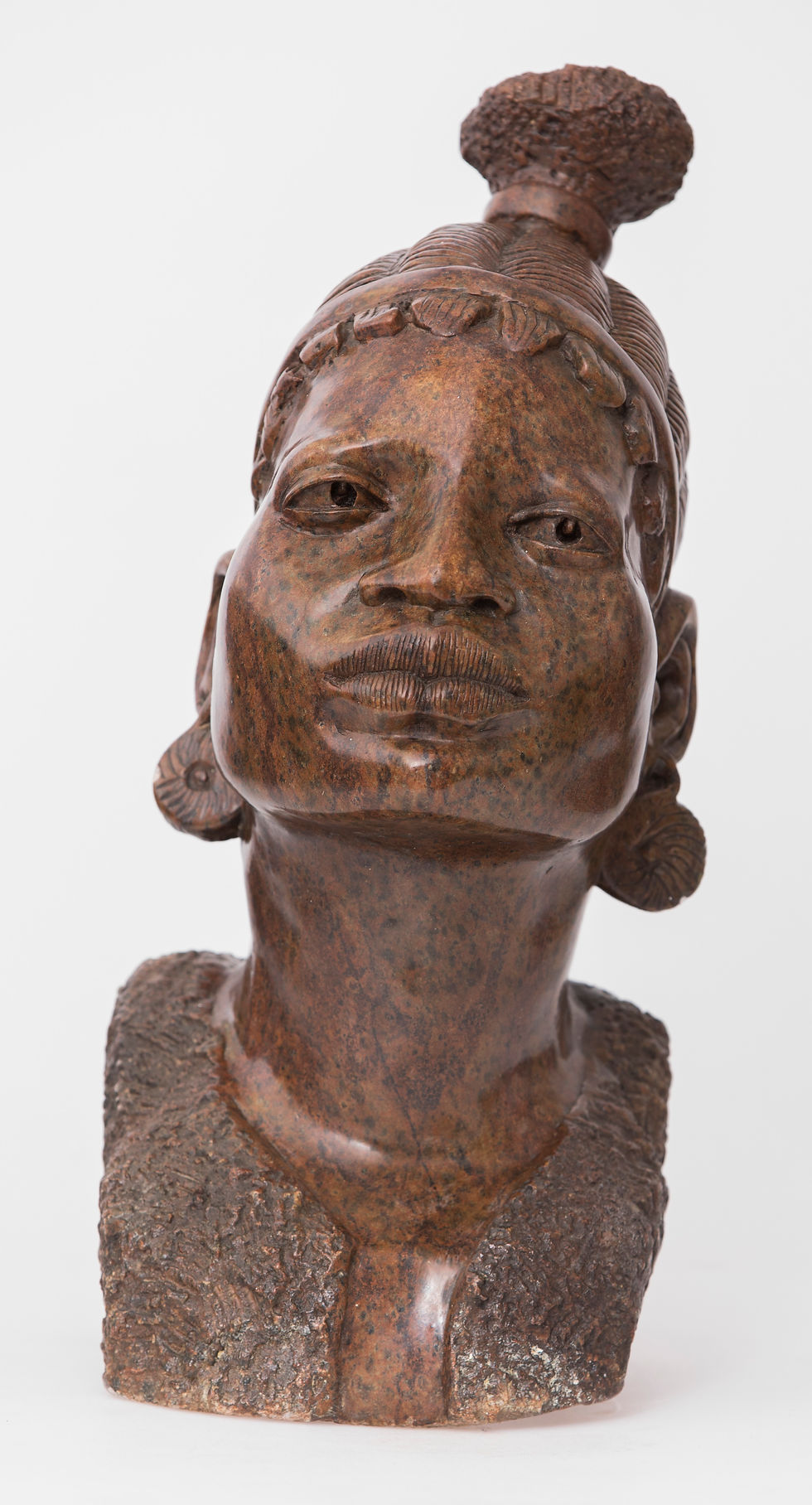
#2 of 2 Images Serpentine 45.5 cm x 25.5 cm