
Oil on canvas Signed 53 x 106 cm
Oil on canvas Signed 53 x 106 cm
Oil on canvas Signed 53 x 106 cm
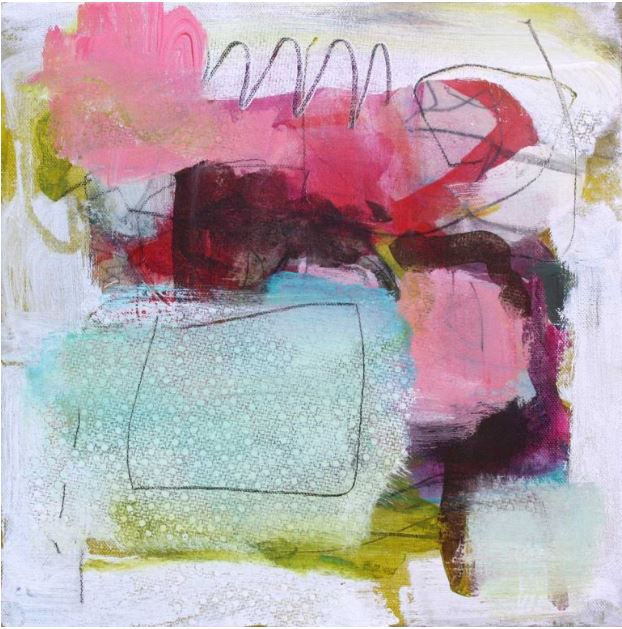
Acrylic on canvas 30.5 x 30.5 cm
Acrylic on canvas 30.5 x 30.5 cm
Acrylic on canvas 30.5 x 30.5 cm
Acrylic on canvas 30.5 x 30.5 cm
Acrylic on canvas 30.5 x 30.5 cm
Oil on canvas Signed 53 x 106 cm

Oil on Canvas 47.6 x 48.3 cm
Oil on Canvas 47.6 x 48.3 cm

Gouache on Paper 75 x 55 cm

Gouache on Paper 75 x 55 cm
Gouache on Paper 75 x 55 cm
Gouache on Paper 75 x 55 cm

Acrylic on Canvas 91.4 cm x 61 cm Signed lower right; titled and dated verso; unframed
Acrylic on Canvas 91.4 cm x 61 cm Signed lower right; titled and dated verso; unframed
Acrylic on Canvas 91.4 cm x 61 cm Signed lower right; titled and dated verso; unframed
Acrylic on Canvas 91.4 cm x 61 cm Signed lower right; titled and dated verso; unframed

Acrylic on Canvas 91.4 cm x 61 cm Dated 1996 Signed lower right, Titled and dated verso, Unframed
Northwest Coast
Inuit Sculpture Artist Unknown

Sedna Soapstone
Sedna Soapstone

High Fired Pottery 27.5 cm x 18.7 cm x 18.7 cm

Acrylic Painted Skull 44 cm x 20 cm

Oil on canvas Signed; Numbered 12-06 76 x 58 cm
Oil on canvas Signed; Numbered 12-06 76 x 58 cm
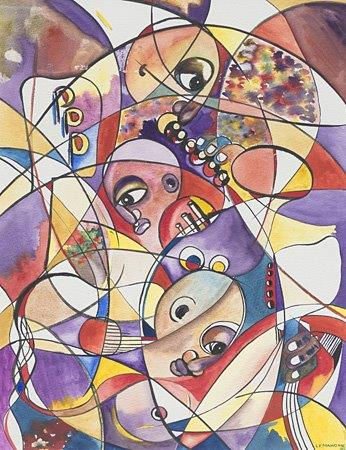
Watercolor Signed Dated 1993 36 x 28cm
Watercolor Signed Dated 1993 36 x 28cm
Watercolor Signed Dated 1993 36 x 28cm
Watercolor Signed Dated 1993 36 x 28cm

Rosewood Tables 78 cm x 150 cm x 54.5 cm
Rosewood Tables 78 cm x 150 cm x 54.5 cm
Rosewood Tables 78 cm x 150 cm x 54.5 cm
Rosewood Tables 78 cm x 150 cm x 54.5 cm
Rosewood Tables 78 cm x 150 cm x 54.5 cm
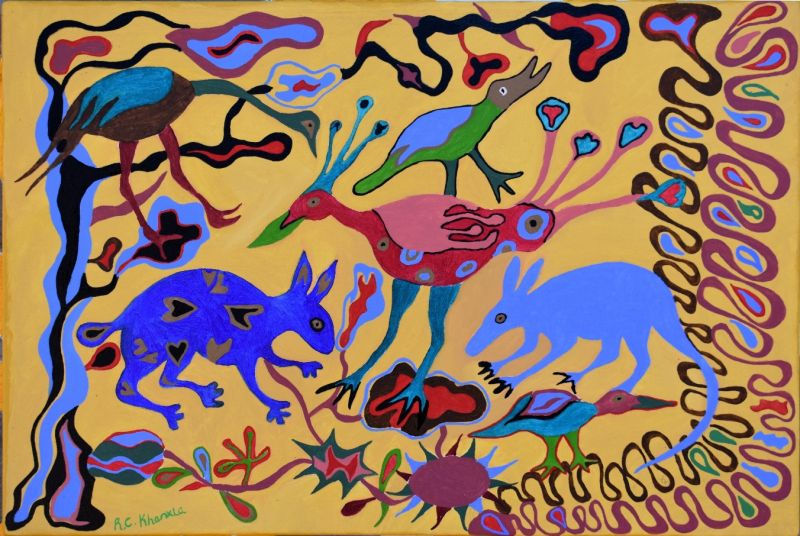
Oil on canvas 57.2 x 85.5 cm

Oil on Board Signed Dated 1962 90 cm x 65 cm
Oil on Board Signed Dated 1962 90 cm x 65 cm

Coloured pencil on paper 24.1 x 18.4 cm 2015
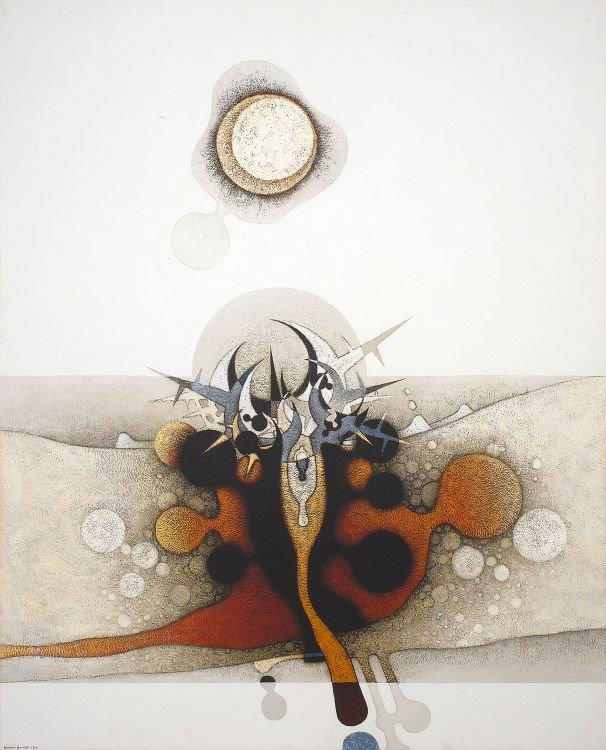
Sunburst Mixed Media on Board 122.5 x 99 cm
Sunburst Mixed Media on Board 122.5 x 99 cm
Bobbie Burgers
Bobbie Burgers is a contemporary Canadian painter. Her lush and Expressionistic depictions of flowers teeter on the verge of abstraction, bursting with bright color and laden with thickly applied, textural paint. “Flowers, to me, are the opposite of still,” the artist has explained. “Changing from minute to minute, they are perfect symbols for life, death, yearning, and beauty. My brushstrokes are layered with my own internal charges, depicting anger, frustration, softness, wanting, and more.” Born in 1973 in Vancouver, Canada, she studied Art History at the University of Victoria in British Columbia. Her work has been exhibited widely at home and abroad, notably including Art Market San Francisco and Equinox Gallery. Today, her works are in the collections of the Berost Corporation in Toronto and the Royal Bank of Canada, among others. Burgers lives and works in Vancouver, Canada.
Bobbie Burgers
Bobbie Burgers is a contemporary Canadian painter. Her lush and Expressionistic depictions of flowers teeter on the verge of abstraction, bursting with bright color and laden with thickly applied, textural paint. “Flowers, to me, are the opposite of still,” the artist has explained. “Changing from minute to minute, they are perfect symbols for life, death, yearning, and beauty. My brushstrokes are layered with my own internal charges, depicting anger, frustration, softness, wanting, and more.” Born in 1973 in Vancouver, Canada, she studied Art History at the University of Victoria in British Columbia. Her work has been exhibited widely at home and abroad, notably including Art Market San Francisco and Equinox Gallery. Today, her works are in the collections of the Berost Corporation in Toronto and the Royal Bank of Canada, among others. Burgers lives and works in Vancouver, Canada.
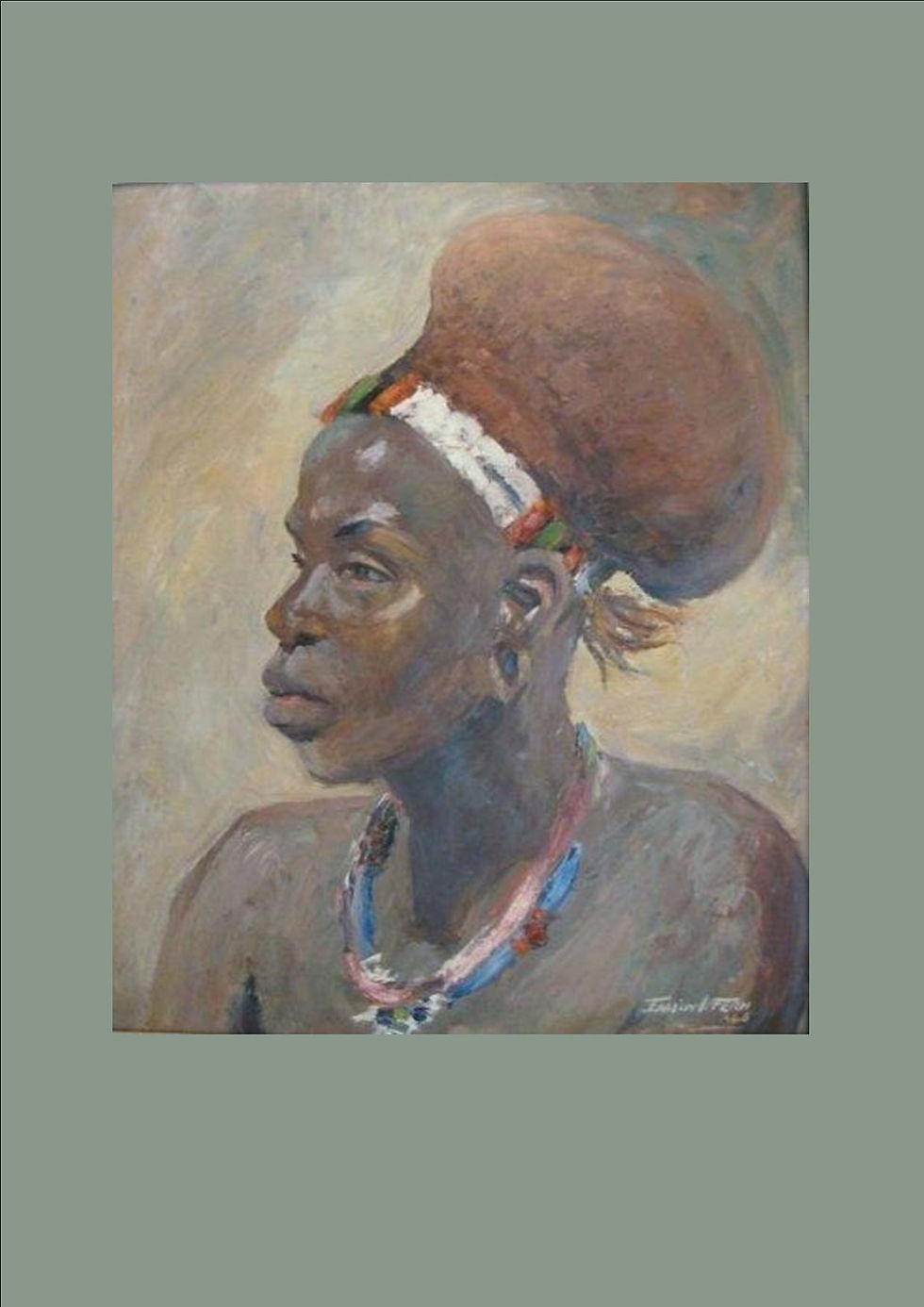
Oil on canvas Signed 32 x 39 cm
Oil on canvas Signed 32 x 39 cm

Oil on board 44 cm x 45 cm
Oil on board 44 cm x 45 cm

Oil on Canvas Dated 2012 75 cm x 57cm
Oil on Canvas Dated 2012 75 cm x 57cm

Oil Signed .Titled 88 x 120 cm
Oil Signed .Titled 88 x 120 cm

Mixed Media and Collage on canvas Signed Dated 16 163 cm x 160 cm
Mixed Media and Collage on canvas Signed Dated 16 163 cm x 160 cm
Mixed Media and Collage on canvas Signed Dated 16 163 cm x 160 cm

Oil on canvas Signed 53 x 106 cm

Acrylic on Board Signed 44 cm x 40 cm
Acrylic on Board Signed 44 cm x 40 cm

Colour Pencil on Paper Signed 16 cm x 11 cm
High Fired Pottery 27.5 cm x 18.7 cm x 18.7 cm

Signed Oil 24 cm x 35 cm
Contemporary South African Art
Morrisseau, Norval
Article credits to WIKIPEDIA
Norval Morrisseau, CM (March 14, 1932 – December 4, 2007),[1] also known as Copper Thunderbird, was an Aboriginal Canadianartist. Known as the "Picasso of the North", Morrisseau created works depicting the legends of his people, the cultural and political tensions between native Canadian and European traditions, his existential struggles, and his deep spirituality and mysticism. His style is characterized by thick black outlines and bright colors. He founded the Woodlands School of Canadian art and was a prominent member of the “Indian Group of Seven”.
An Anishinaabe, he was born March 14, 1932 on the Sand Point Ojibway reserve near Beardmore, Ontario. Some sources quote him as saying that he was born in Fort William, now part of Thunder Bay, Ontario, on the same date in 1931. His full name is Jean-Baptiste Norman Henry Morrisseau, but he signs his work using the Cree syllabics writing ᐅᓵᐚᐱᐦᑯᐱᓀᐦᓯ (Ozaawaabiko-binesi, unpointed: ᐅᓴᐘᐱᑯᐱᓀᓯ, "Copper/Brass [Thunder]Bird"), as his pen-name for his Anishnaabe name ᒥᐢᒁᐱᐦᐠ ᐊᓂᒥᐦᑮ (Miskwaabik Animikii, unpointed: ᒥᐢᑿᐱᐠ ᐊᓂᒥᑭ, "Copper Thunderbird").
In accordance with Anishnaabe tradition, he was raised by his maternal grandparents. His grandfather, Moses Potan Nanakonagos, ashaman, taught him the traditions and legends of his people. His grandmother, Grace Theresa Potan Nanakonagos, was a devoutCatholic and from her he learned the tenets of Christianity. The contrast between these two religious traditions became an important factor in his intellectual and artistic development.
At the age of six, he was sent to a Catholic residential school, where students were educated in the European tradition, native culture was repressed, and the use of native language was forbidden. After two years he returned home and started attending a local community school.
At the age of 19, he became very sick. He was taken to a doctor but his health kept deteriorating. Fearing for his life, his mother called a medicine-woman who performed a renaming ceremony: She gave him the new name Copper Thunderbird. According to Anishnaabe tradition, giving a powerful name to a dying person can give them new energy and save their lives. Morrisseau recovered after the ceremony and from then on always signed his works with his new name.
Morrisseau contracted tuberculosis in 1957 and was sent to Fort William to recover. There he met his future wife Harriet Kakegamic with whom he had seven children, Victoria, Michael, Peter, David, Lisa, Eugene and Christian.
After being invited to meet the artist by Ontario Provincial Police Constable Robert Sheppard, an early advocate of Morrisseau was the anthropologist Selwyn Dewdney, who became very interested in Morrisseau's deep knowledge of native culture and myth. Dewdney was the first to take his art to a wider public.
Shaman-Thunderbird Transformation
Provenance:
Acquired directly from the artist (circa 1964)
The Sportsman Lodge on Little Vermilion Lake, Ontario
By descent to the present Private Collection, British Columbia
Gearyb's Sports Centre was located at the south end of Howey Bay in Red Lake, an aviation hub and retail spot in the area. Owned by the Geary family, they regularly encountered Norval Morrisseau, the artist frequently stopping by the store on his way to and from his home in Sandy Lake Reserve, First Nation. During one visit, circa 1964, Morrisseau arrived with three works of art, which the family purchased. The paintings were flown to another of the Geary family's businesses, the Sportsmanb's Lodge on Little Vermilion Lake (north of Red Lake), where they were hung. Built by the family and opened in 1959, the lodge would be home to bShaman-Thunderbird Transformationbfor more than thirty-five years, passing then into the family's private collection. The consignor fondly recalls lying on the dining room floor of Sportsmanb's Lodge as a child, looking up in awe of the wonderous work.

Acrylic on Board Signed 88 x 70.4 cm

Acrylic on Canvas Signed in Syllabics Lower Right Titled to Stretcher in Pencil and to Gallery Label Verso 106.7 cm x 106.7 cm

Acrylic on Canvas 26" x 26"

Acrylic on card 46.4 x 68.6 cm Signed

Acrylic on Canvas Signed front and back 33 cm x 47.8 cm

Acrylic on Kraft Card on Masonite 81.3 cm x 61 cm

Acrylic on Canvas 91.4 x 101.6 cm Signed Syllabics lower left

Acrylic on Canvas 116 cm x 165 cm
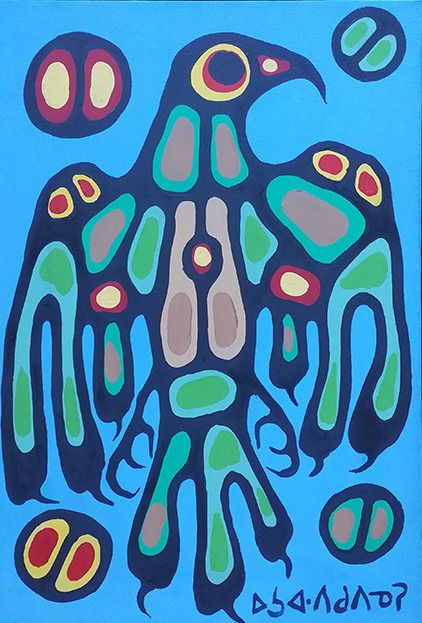
Acrylic on Canvas 48.25 cm x 70 cm

Acrylic on paper 61 x 45.7 cm Signed

Acrylic on paper 78.7 x 27.9 cm Signed

Acrylic on Canvas 33cm x 47.8 cm Signed front and back Landos May 2021

Provenance: Barney and Marion Lamm.
The Lamms operated a wilderness resort in Ontario, Canada (1945-1970) with assistance from the local Anishinaabe (Ojibwe) bands. Following an industrial mercury disaster in 1970, the Lamms became environmental activists on behalf of themselves and the Ojibwe. The Marion Lamm Mercury Library at Harvard holds the family archives on this history and its effect on indigenous peoples.
Marion Lamm maintained personal relationships with many Anishnaabeg artists, buying directly from them when they visited her home. Norval Morrisseau, Carl Ray, Eddie Cobiness, and others were guests in the Lamms home and Marion was a favored patron. Upon her death, the collection was dispersed among her five children.

Acrylic on Brown Paper 76 cm x 155 cm Signed Lower Right