
Oil on canvas Signed 53 x 106 cm
Oil on canvas Signed 53 x 106 cm
Oil on canvas Signed 53 x 106 cm
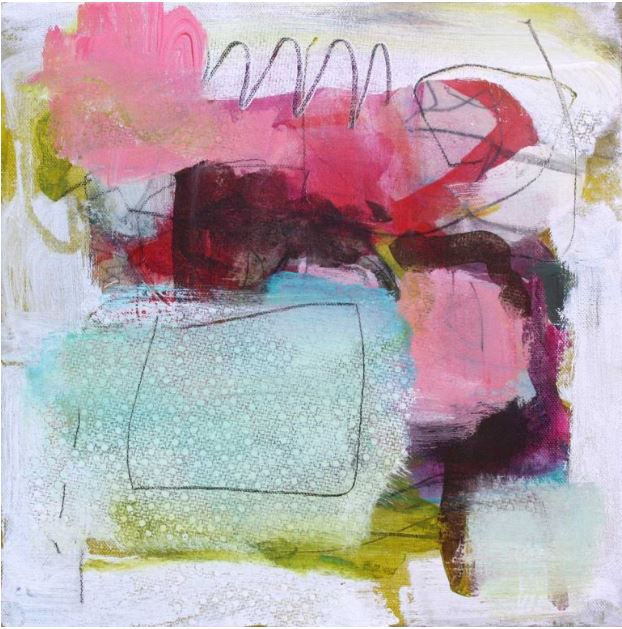
Acrylic on canvas 30.5 x 30.5 cm
Acrylic on canvas 30.5 x 30.5 cm
Acrylic on canvas 30.5 x 30.5 cm
Acrylic on canvas 30.5 x 30.5 cm
Acrylic on canvas 30.5 x 30.5 cm
Oil on canvas Signed 53 x 106 cm

Oil on Canvas 47.6 x 48.3 cm
Oil on Canvas 47.6 x 48.3 cm

Gouache on Paper 75 x 55 cm

Gouache on Paper 75 x 55 cm
Gouache on Paper 75 x 55 cm
Gouache on Paper 75 x 55 cm

Acrylic on Canvas 91.4 cm x 61 cm Signed lower right; titled and dated verso; unframed
Acrylic on Canvas 91.4 cm x 61 cm Signed lower right; titled and dated verso; unframed
Acrylic on Canvas 91.4 cm x 61 cm Signed lower right; titled and dated verso; unframed
Acrylic on Canvas 91.4 cm x 61 cm Signed lower right; titled and dated verso; unframed

Acrylic on Canvas 91.4 cm x 61 cm Dated 1996 Signed lower right, Titled and dated verso, Unframed
Northwest Coast
Inuit Sculpture Artist Unknown

Sedna Soapstone
Sedna Soapstone

High Fired Pottery 27.5 cm x 18.7 cm x 18.7 cm

Acrylic Painted Skull 44 cm x 20 cm

Oil on canvas Signed; Numbered 12-06 76 x 58 cm
Oil on canvas Signed; Numbered 12-06 76 x 58 cm
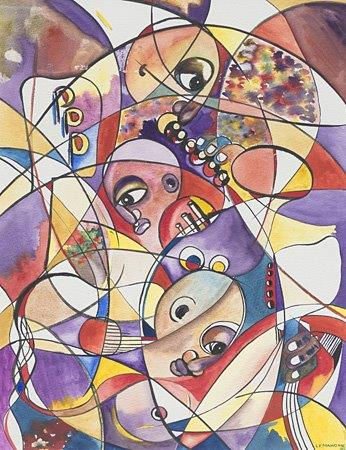
Watercolor Signed Dated 1993 36 x 28cm
Watercolor Signed Dated 1993 36 x 28cm
Watercolor Signed Dated 1993 36 x 28cm
Watercolor Signed Dated 1993 36 x 28cm

Rosewood Tables 78 cm x 150 cm x 54.5 cm
Rosewood Tables 78 cm x 150 cm x 54.5 cm
Rosewood Tables 78 cm x 150 cm x 54.5 cm
Rosewood Tables 78 cm x 150 cm x 54.5 cm
Rosewood Tables 78 cm x 150 cm x 54.5 cm
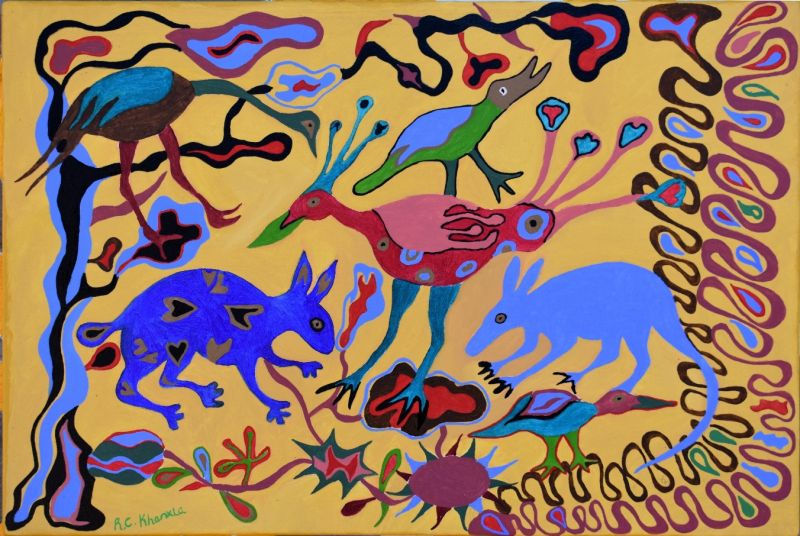
Oil on canvas 57.2 x 85.5 cm

Oil on Board Signed Dated 1962 90 cm x 65 cm
Oil on Board Signed Dated 1962 90 cm x 65 cm

Coloured pencil on paper 24.1 x 18.4 cm 2015
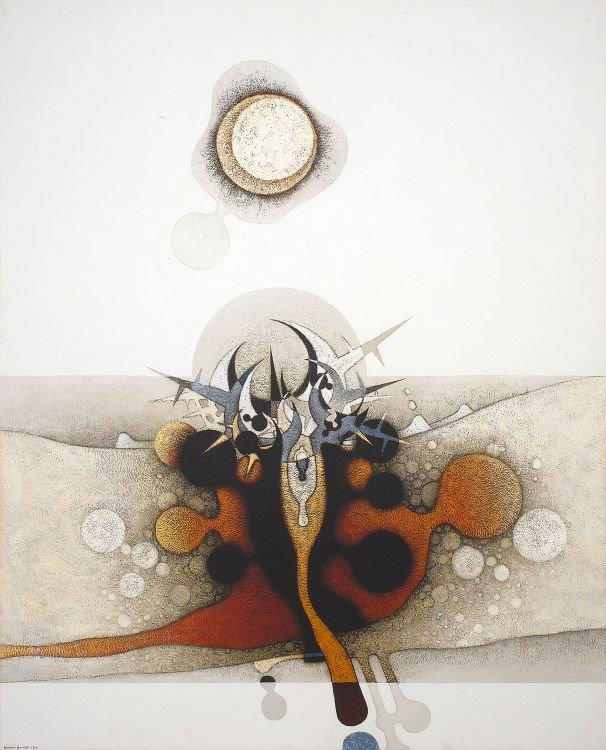
Sunburst Mixed Media on Board 122.5 x 99 cm
Sunburst Mixed Media on Board 122.5 x 99 cm
Bobbie Burgers
Bobbie Burgers is a contemporary Canadian painter. Her lush and Expressionistic depictions of flowers teeter on the verge of abstraction, bursting with bright color and laden with thickly applied, textural paint. “Flowers, to me, are the opposite of still,” the artist has explained. “Changing from minute to minute, they are perfect symbols for life, death, yearning, and beauty. My brushstrokes are layered with my own internal charges, depicting anger, frustration, softness, wanting, and more.” Born in 1973 in Vancouver, Canada, she studied Art History at the University of Victoria in British Columbia. Her work has been exhibited widely at home and abroad, notably including Art Market San Francisco and Equinox Gallery. Today, her works are in the collections of the Berost Corporation in Toronto and the Royal Bank of Canada, among others. Burgers lives and works in Vancouver, Canada.
Bobbie Burgers
Bobbie Burgers is a contemporary Canadian painter. Her lush and Expressionistic depictions of flowers teeter on the verge of abstraction, bursting with bright color and laden with thickly applied, textural paint. “Flowers, to me, are the opposite of still,” the artist has explained. “Changing from minute to minute, they are perfect symbols for life, death, yearning, and beauty. My brushstrokes are layered with my own internal charges, depicting anger, frustration, softness, wanting, and more.” Born in 1973 in Vancouver, Canada, she studied Art History at the University of Victoria in British Columbia. Her work has been exhibited widely at home and abroad, notably including Art Market San Francisco and Equinox Gallery. Today, her works are in the collections of the Berost Corporation in Toronto and the Royal Bank of Canada, among others. Burgers lives and works in Vancouver, Canada.
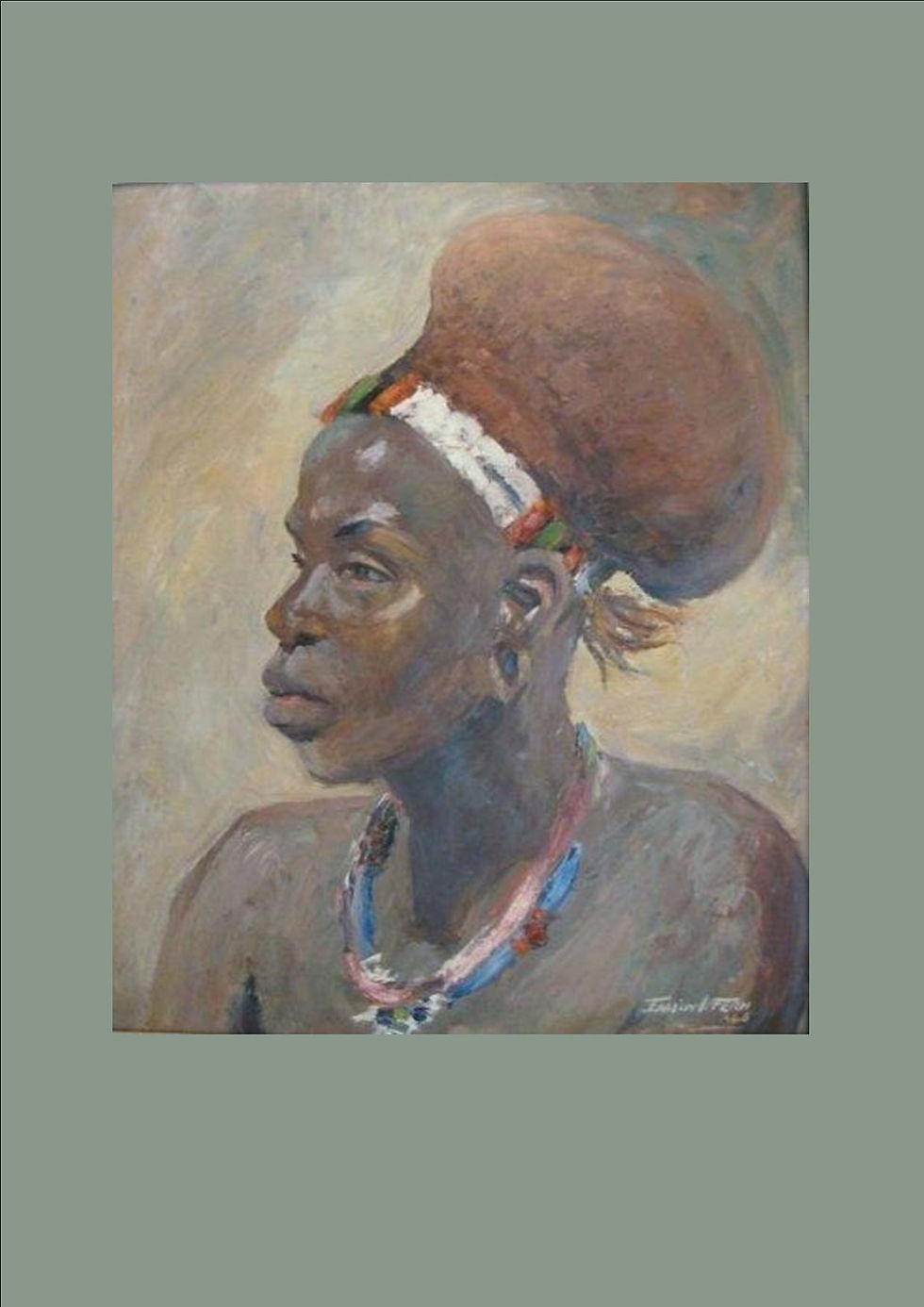
Oil on canvas Signed 32 x 39 cm
Oil on canvas Signed 32 x 39 cm

Oil on board 44 cm x 45 cm
Oil on board 44 cm x 45 cm

Oil on Canvas Dated 2012 75 cm x 57cm
Oil on Canvas Dated 2012 75 cm x 57cm

Oil Signed .Titled 88 x 120 cm
Oil Signed .Titled 88 x 120 cm

Mixed Media and Collage on canvas Signed Dated 16 163 cm x 160 cm
Mixed Media and Collage on canvas Signed Dated 16 163 cm x 160 cm
Mixed Media and Collage on canvas Signed Dated 16 163 cm x 160 cm

Oil on canvas Signed 53 x 106 cm

Acrylic on Board Signed 44 cm x 40 cm
Acrylic on Board Signed 44 cm x 40 cm

Colour Pencil on Paper Signed 16 cm x 11 cm
High Fired Pottery 27.5 cm x 18.7 cm x 18.7 cm

Signed Oil 24 cm x 35 cm
Contemporary South African Art
Mgijima, Vuyisani
Vuyisani Mgijima's artwork is infused with memories
of a rural childhood. The challenge of living in
a democratising, dynamic country in transition is
met by successfully and skilfully striking a balance between a traditional past and
a democratic present. Depicting the interaction between these two realities led the artist to do particularly good
work in the late 1990s.
To him, good work is something he really falls in love with, something different, something that takes on a life of it’s own.
"It is not based on realism. It is about colour and the way I painted this work, the sharp-sharp", he said.
In as much as his definition of colourism would not be
a Western one, says Gail Dörje, who runs the Cape
Gallery and has known Mgijima for many years,
so Mgijima uses his figures to enact the social drama
and expectations of life on the rural and urban stages.
Mgijima lives in Lost City in Tafelsig, part of Mitchell's
Plain in the Cape Flats.
The daily struggles of township life contrast strongly with Mgijima’s memories of his early years in Herschel, where he would spend his time roaming the mountains, herding cattle, swimming in rivers and making craftwork, especially with clay. Then he only visited the city once a month. Mgijima's uncle, a preacher with whom the artist lived in the Eastern Cape, made enquiries about summer and winter school art programmes offered at the University of Fort Hare in Alice. That is where Mgijima says he fell "more in love with art".
When Mgijima saw a pamphlet of CAP, sensing that this was a progressive institution, he pleaded with his uncle to allow him to apply there. He says, "My uncle called CAP and they asked about my standard of education. 'No education but lots of creativity!' is what my uncle told them".
Mgijima came back to his city of birth in 1988 and joined CAP. At the end of his second year, his work was part of the final year exhibition and caught the attention of Barbara Pitt from the Foundation School of Fine Art in Observatory. Pitt subsequently sponsoring Mgijima's studies at Foundation School of Fine Art, as well as assisting him with accommodation.
Moving to Cape Town meant having to adapt to a radically different lifestyle. "Where I grew up, we had no bioscopes or TV. We'd swim in the river. [Now I have to] pay for the pool in Observatory."
Mgijima states "I work from imagination, I don't own
a camera. I work from what's inside of me". One of the personal and artistic turning points in his life was when Mgijima was stabbed in Guguletu. "I was in hospital for two years, I am left-handed and my left arm did not work.
When I fell, I prayed 'I still have a lot to do'. Going out of
this body is very easy. I have done it many times.
The soul is eternal.... I was still very young and this
made me understand the world differently".Although he has been living in Cape Town for many years, Mgijima keeps childhood memories and family traditions alive. "At home we'd have sangoma ceremonies and we'd copy the steps. 'Let's do it one style', I would sometimes tell my friends", he said.
"Sometimes with my daughter, we dance, do tribal things. In a civilized way it would be called theatre and drama. For us it is just games and playful.”
Among his most powerful and insightful pieces are "Iskenk Jive" and "Umboniso Ntsomi Nolwazi Efatwaneni".
"Iskenk Jive" is divided into two section, the upper part of the painting being filled with four girls, wearing blue school uniforms and performing a vibrant dance, their bodies bending to the rhythm, their knees and arms rising up.From their heads to their feet, the rhythm captures their bodies and curves their limbs.
Below this scene is a much more mysterious section.
A figure, holding a stick with an African mask concealing the face is surrounded by people in a traditional ceremony.
"Umboniso Ntsomi Nolwazi Efatwaneni" (meaning “Teaching children through storytelling”) similarly depicts two scenes, the upper part of the painting again filled with children (this time a group of cheering boys, mouths open, hands and arms waving excitedly), while set beneath this vibrancy is a crouched figure, leaning on a stick, wearing tassels around the calves, bells or beads around the ankles and arms.
Both paintings could be interpreted as depicting the conscious and subconscious worlds; the veneer of modern township life over the traditions of his culture, or their mutual reciprosity in forming and informing life.
Many of Mgijima’s recent paintings have two suns in the sky. "These are two yin and yang-type of opposites, it creates a balance", he explained.
In "The Sun is Chasing the Moon", a group of boys play soccer in front of a row of dwellings and the sun pierces through a white sky. Set below is a faint white circle,
a rising moon.
Dörje believes that the work of German photographer Manfred Ziller, who used to teach at the Cape Town Art Project (CAP) has been assimilated in Mgijima’s work.
"If you look at his brand of social realism and imaging, you will notice that he has had a profound influence on Mgijima", she said.
In his work "The People's Tap", which is a close-up of
a tap with a cut hose-pipe, bucket and cracked wall,
Mgijima could be making a statement about the basic, almost biblical, necessities of life. The mixture of letters
on the bucket suggests the word 'bread', while the source of water provides a focal point around which a community could develop.
Along with work by Tyrone Apollis, Willie Bester and many Western Cape artists, Mgijima’s ‘Unification’ was part of the ceremonial opening of the British Council offices in Athlone in 1993. “I spent extra hours at the school and took it in with other works. I didn't turn up at the opening.
I am very shy and can't mix with too many people, just
with my selection of friends", he admits. The piece was subsequently purchased by the British Council.
Mgijima chooses his words carefully and underlines his utterances with vivid hand gestures. He learnt English
when he came to Cape Town, but prefers to let his art talk: "I don't conquer my work, I let it be my master. I don't break my head, I let it conquer me".
Mgijima’s philosophy on life is that you should feel proud whatever your circumstances: “Isazela, as we say in Xhosa. It has got a lot to do with self-understanding, that is how one should be."
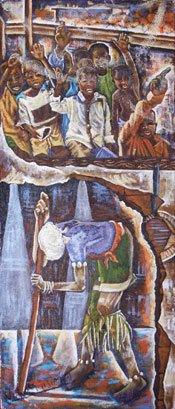
Mixed Media

Mixed Media