
Oil on canvas Signed 53 x 106 cm
Oil on canvas Signed 53 x 106 cm
Oil on canvas Signed 53 x 106 cm
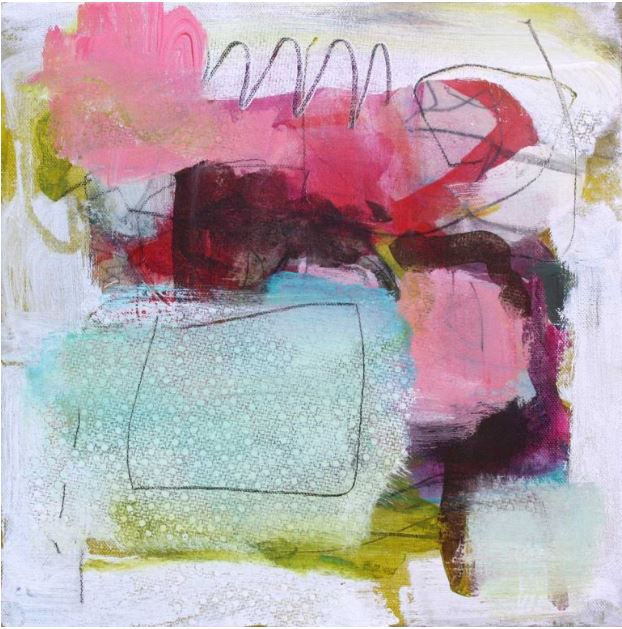
Acrylic on canvas 30.5 x 30.5 cm
Acrylic on canvas 30.5 x 30.5 cm
Acrylic on canvas 30.5 x 30.5 cm
Acrylic on canvas 30.5 x 30.5 cm
Acrylic on canvas 30.5 x 30.5 cm
Oil on canvas Signed 53 x 106 cm

Oil on Canvas 47.6 x 48.3 cm
Oil on Canvas 47.6 x 48.3 cm

Gouache on Paper 75 x 55 cm

Gouache on Paper 75 x 55 cm
Gouache on Paper 75 x 55 cm
Gouache on Paper 75 x 55 cm

Acrylic on Canvas 91.4 cm x 61 cm Signed lower right; titled and dated verso; unframed
Acrylic on Canvas 91.4 cm x 61 cm Signed lower right; titled and dated verso; unframed
Acrylic on Canvas 91.4 cm x 61 cm Signed lower right; titled and dated verso; unframed
Acrylic on Canvas 91.4 cm x 61 cm Signed lower right; titled and dated verso; unframed

Acrylic on Canvas 91.4 cm x 61 cm Dated 1996 Signed lower right, Titled and dated verso, Unframed
Northwest Coast
Inuit Sculpture Artist Unknown

Sedna Soapstone
Sedna Soapstone

High Fired Pottery 27.5 cm x 18.7 cm x 18.7 cm

Acrylic Painted Skull 44 cm x 20 cm

Oil on canvas Signed; Numbered 12-06 76 x 58 cm
Oil on canvas Signed; Numbered 12-06 76 x 58 cm
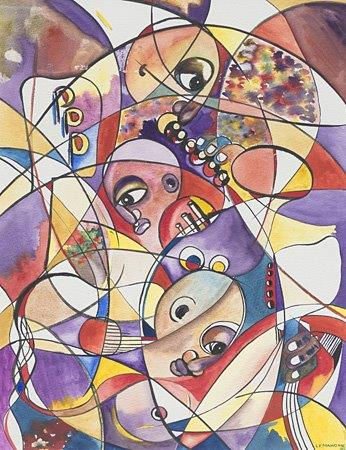
Watercolor Signed Dated 1993 36 x 28cm
Watercolor Signed Dated 1993 36 x 28cm
Watercolor Signed Dated 1993 36 x 28cm
Watercolor Signed Dated 1993 36 x 28cm

Rosewood Tables 78 cm x 150 cm x 54.5 cm
Rosewood Tables 78 cm x 150 cm x 54.5 cm
Rosewood Tables 78 cm x 150 cm x 54.5 cm
Rosewood Tables 78 cm x 150 cm x 54.5 cm
Rosewood Tables 78 cm x 150 cm x 54.5 cm
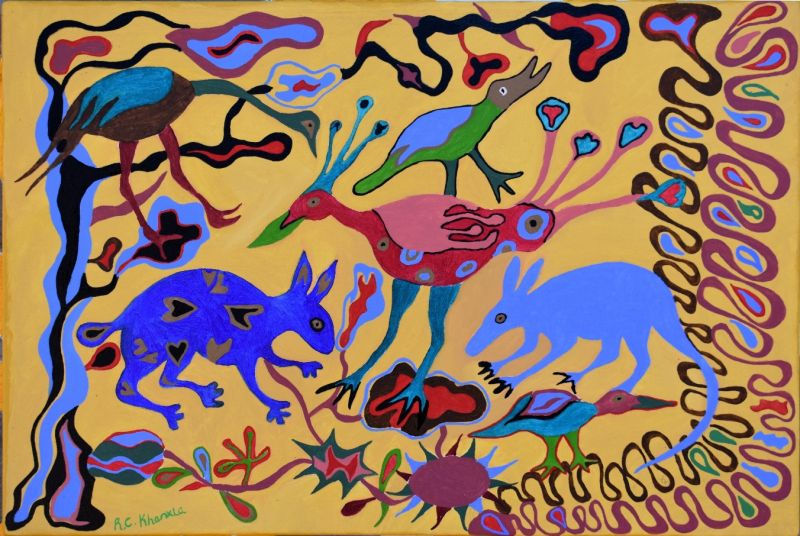
Oil on canvas 57.2 x 85.5 cm

Oil on Board Signed Dated 1962 90 cm x 65 cm
Oil on Board Signed Dated 1962 90 cm x 65 cm

Coloured pencil on paper 24.1 x 18.4 cm 2015
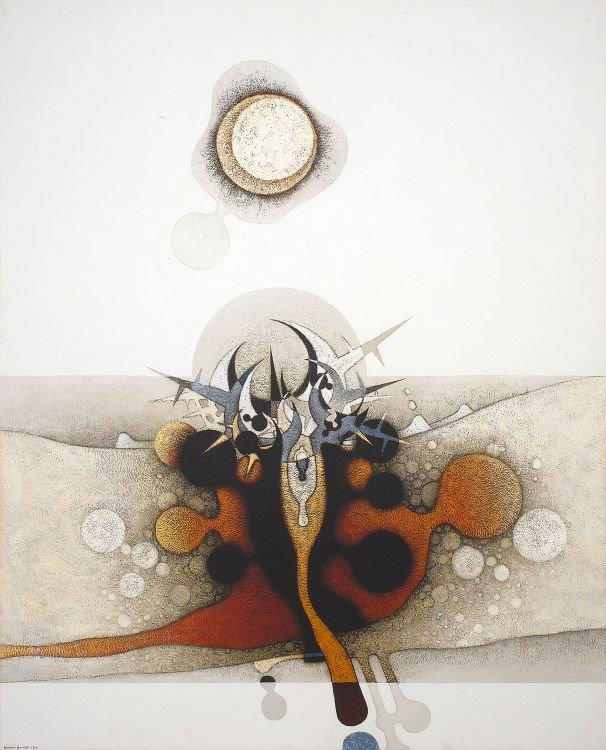
Sunburst Mixed Media on Board 122.5 x 99 cm
Sunburst Mixed Media on Board 122.5 x 99 cm
Bobbie Burgers
Bobbie Burgers is a contemporary Canadian painter. Her lush and Expressionistic depictions of flowers teeter on the verge of abstraction, bursting with bright color and laden with thickly applied, textural paint. “Flowers, to me, are the opposite of still,” the artist has explained. “Changing from minute to minute, they are perfect symbols for life, death, yearning, and beauty. My brushstrokes are layered with my own internal charges, depicting anger, frustration, softness, wanting, and more.” Born in 1973 in Vancouver, Canada, she studied Art History at the University of Victoria in British Columbia. Her work has been exhibited widely at home and abroad, notably including Art Market San Francisco and Equinox Gallery. Today, her works are in the collections of the Berost Corporation in Toronto and the Royal Bank of Canada, among others. Burgers lives and works in Vancouver, Canada.
Bobbie Burgers
Bobbie Burgers is a contemporary Canadian painter. Her lush and Expressionistic depictions of flowers teeter on the verge of abstraction, bursting with bright color and laden with thickly applied, textural paint. “Flowers, to me, are the opposite of still,” the artist has explained. “Changing from minute to minute, they are perfect symbols for life, death, yearning, and beauty. My brushstrokes are layered with my own internal charges, depicting anger, frustration, softness, wanting, and more.” Born in 1973 in Vancouver, Canada, she studied Art History at the University of Victoria in British Columbia. Her work has been exhibited widely at home and abroad, notably including Art Market San Francisco and Equinox Gallery. Today, her works are in the collections of the Berost Corporation in Toronto and the Royal Bank of Canada, among others. Burgers lives and works in Vancouver, Canada.
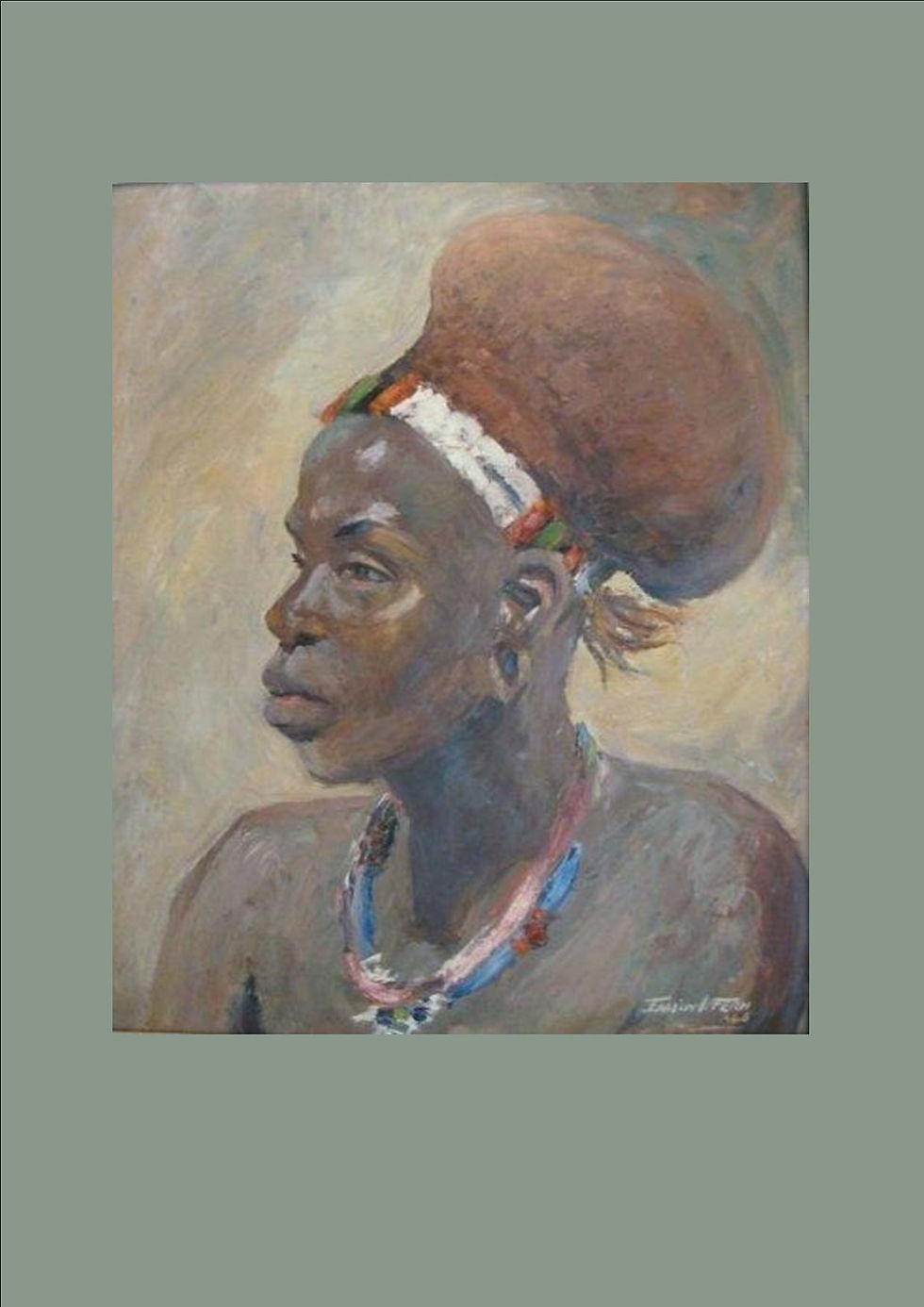
Oil on canvas Signed 32 x 39 cm
Oil on canvas Signed 32 x 39 cm

Oil on board 44 cm x 45 cm
Oil on board 44 cm x 45 cm

Oil on Canvas Dated 2012 75 cm x 57cm
Oil on Canvas Dated 2012 75 cm x 57cm

Oil Signed .Titled 88 x 120 cm
Oil Signed .Titled 88 x 120 cm

Mixed Media and Collage on canvas Signed Dated 16 163 cm x 160 cm
Mixed Media and Collage on canvas Signed Dated 16 163 cm x 160 cm
Mixed Media and Collage on canvas Signed Dated 16 163 cm x 160 cm

Oil on canvas Signed 53 x 106 cm

Acrylic on Board Signed 44 cm x 40 cm
Acrylic on Board Signed 44 cm x 40 cm

Colour Pencil on Paper Signed 16 cm x 11 cm
High Fired Pottery 27.5 cm x 18.7 cm x 18.7 cm

Signed Oil 24 cm x 35 cm
Contemporary South African Art
Mbele, David
Article credits to Ardis African Art
David Mbele was born in 1940 in Sanderton in Mpumalanga Province and comes from a rural farming community. From an early age he developed an interest in art and sketched all aspects of township life around him. He spent his time after school copying cartoons from the newspapers.
During 1957 he came to the Johannesburg metropolis. At this stage he had only received basic education. In 1959 he studied various art techniques at the hand of Cecil Skotnes, a white artist that had a kinship to fellow African artists and taught at the "Polly Street Art Center" in Johannesburg. Other than this, the only training that he received was at the hand of other established African artists of this period, like the late Ephraim Ngatane before his exile to France.
Mbele has participated in several group exhibitions from 1960 on in South Africa, West Germany, Italy, the USA, England, Spain and France. In 1961 he had his first solo exhibitions at the "Adler Fielding Gallery" in Johannesburg. Later he exhibited at the "Lidchi Gallery". His work was reproduced on the cover of "South African Contemporary Artists" in 1980 and the cover of "Contrast 51" in 1982. His works has been highly acclaimed in Atlanta, Georgia, USA where he exhibited in 1989. During 1996 his work was included in an exhibition held in "Capitol Hill", Washington DC. In November 2000 his work was exhibited at the "Airport Art Gallery" in Germinston, South Africa and was a sell out on the first day. His work has been includes in major South African Art Collections.
About his art:
Mbele's work belongs to the genre of "township" art. He is a graphic artist producing etchings and linocuts. Mbele works mainly in pastels, chalks and he prefers earthy colors such as shades of brown, ochre and yellow, with black, white and grey for emphasis. By utilizing just these basic colors he manages to capture the emotions of the subjects with a subtle skill. It is almost as if we are able to feel the mood of the people being portrayed in his art pieces. David uses the everyday activities of people that he sees around him as his subject matter. The compositions are remarkably simplistic in design yet they are extremely effective. They have a character of their own and although they are not realistic in design, they capture the gentleness, wisdom, patience, forgiveness and endurance of a people.
His work can always easily be recognized in any collection. He developed a style that is easy going on the eye of the observer. The works are soft and gentle with a rare feeling of grace and dignity in them.
His figures are bold and big. He makes very little attempt at including finer detail in his pictures and he creates the human figure mainly through big circular and curvilinear forms. There is a considerable amount of bodily distortion in these figures, which at times contributes to the success with which he manages to express particular emotions or moods.
In almost all of the paintings done by David, the eyes of the people are closed. Being questioned on this matter he replied that it was a phenomenon that he experienced in contemporary African society. During the apartheid years the people continued doing what they had to do, whether it was reading a newspaper, playing cards, drinking some beer or just going about their normal daily life with their "eyes" closed, not meaning that they physically closed their eyes, but that they closed their eyes to the reality that they found themselves in.
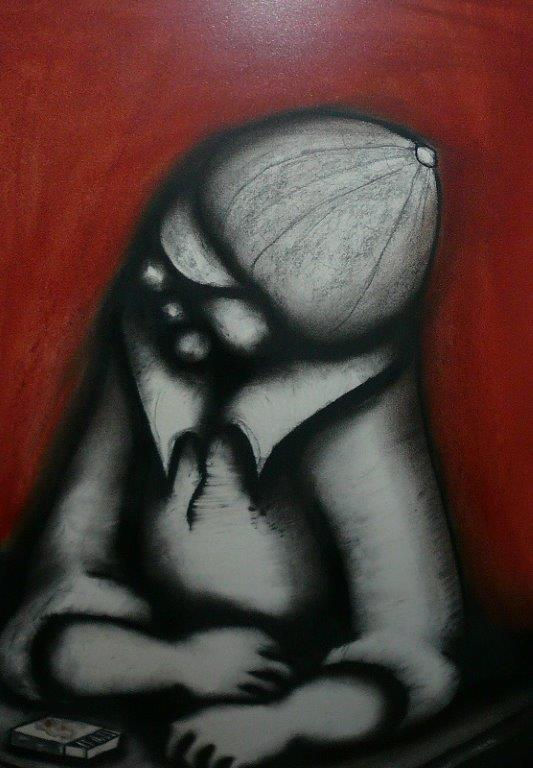
Pastel Signed 71 x 49 cm