
Oil on canvas Signed 53 x 106 cm
Oil on canvas Signed 53 x 106 cm
Oil on canvas Signed 53 x 106 cm
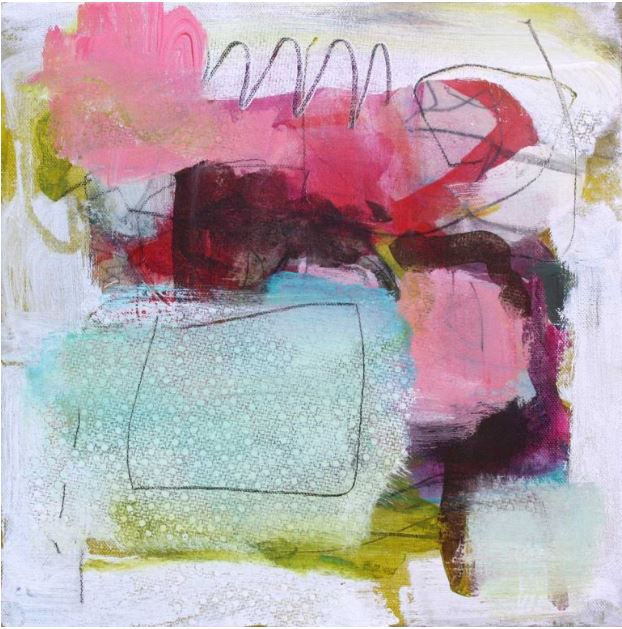
Acrylic on canvas 30.5 x 30.5 cm
Acrylic on canvas 30.5 x 30.5 cm
Acrylic on canvas 30.5 x 30.5 cm
Acrylic on canvas 30.5 x 30.5 cm
Acrylic on canvas 30.5 x 30.5 cm
Oil on canvas Signed 53 x 106 cm

Oil on Canvas 47.6 x 48.3 cm
Oil on Canvas 47.6 x 48.3 cm

Gouache on Paper 75 x 55 cm

Gouache on Paper 75 x 55 cm
Gouache on Paper 75 x 55 cm
Gouache on Paper 75 x 55 cm

Acrylic on Canvas 91.4 cm x 61 cm Signed lower right; titled and dated verso; unframed
Acrylic on Canvas 91.4 cm x 61 cm Signed lower right; titled and dated verso; unframed
Acrylic on Canvas 91.4 cm x 61 cm Signed lower right; titled and dated verso; unframed
Acrylic on Canvas 91.4 cm x 61 cm Signed lower right; titled and dated verso; unframed

Acrylic on Canvas 91.4 cm x 61 cm Dated 1996 Signed lower right, Titled and dated verso, Unframed
Northwest Coast
Inuit Sculpture Artist Unknown

Sedna Soapstone
Sedna Soapstone

High Fired Pottery 27.5 cm x 18.7 cm x 18.7 cm

Acrylic Painted Skull 44 cm x 20 cm

Oil on canvas Signed; Numbered 12-06 76 x 58 cm
Oil on canvas Signed; Numbered 12-06 76 x 58 cm
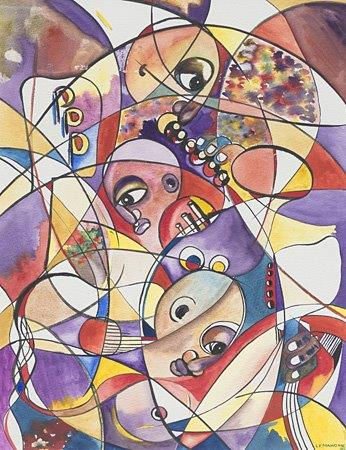
Watercolor Signed Dated 1993 36 x 28cm
Watercolor Signed Dated 1993 36 x 28cm
Watercolor Signed Dated 1993 36 x 28cm
Watercolor Signed Dated 1993 36 x 28cm

Rosewood Tables 78 cm x 150 cm x 54.5 cm
Rosewood Tables 78 cm x 150 cm x 54.5 cm
Rosewood Tables 78 cm x 150 cm x 54.5 cm
Rosewood Tables 78 cm x 150 cm x 54.5 cm
Rosewood Tables 78 cm x 150 cm x 54.5 cm
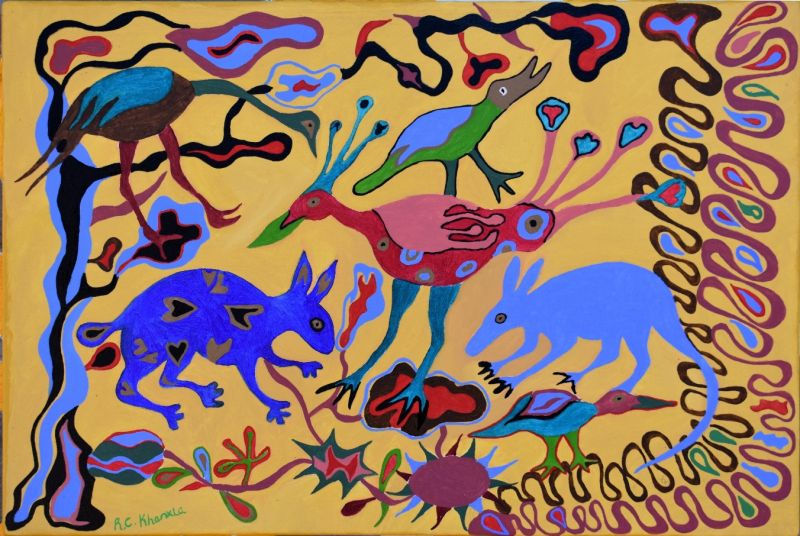
Oil on canvas 57.2 x 85.5 cm

Oil on Board Signed Dated 1962 90 cm x 65 cm
Oil on Board Signed Dated 1962 90 cm x 65 cm

Coloured pencil on paper 24.1 x 18.4 cm 2015
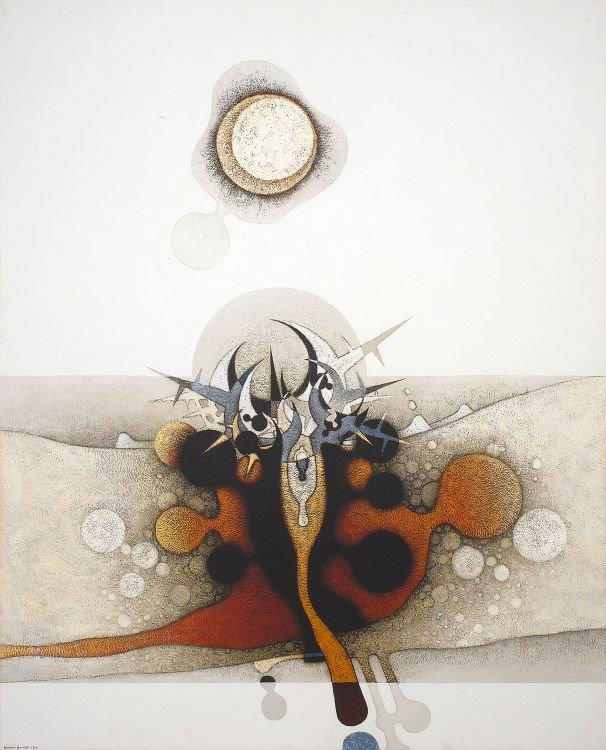
Sunburst Mixed Media on Board 122.5 x 99 cm
Sunburst Mixed Media on Board 122.5 x 99 cm
Bobbie Burgers
Bobbie Burgers is a contemporary Canadian painter. Her lush and Expressionistic depictions of flowers teeter on the verge of abstraction, bursting with bright color and laden with thickly applied, textural paint. “Flowers, to me, are the opposite of still,” the artist has explained. “Changing from minute to minute, they are perfect symbols for life, death, yearning, and beauty. My brushstrokes are layered with my own internal charges, depicting anger, frustration, softness, wanting, and more.” Born in 1973 in Vancouver, Canada, she studied Art History at the University of Victoria in British Columbia. Her work has been exhibited widely at home and abroad, notably including Art Market San Francisco and Equinox Gallery. Today, her works are in the collections of the Berost Corporation in Toronto and the Royal Bank of Canada, among others. Burgers lives and works in Vancouver, Canada.
Bobbie Burgers
Bobbie Burgers is a contemporary Canadian painter. Her lush and Expressionistic depictions of flowers teeter on the verge of abstraction, bursting with bright color and laden with thickly applied, textural paint. “Flowers, to me, are the opposite of still,” the artist has explained. “Changing from minute to minute, they are perfect symbols for life, death, yearning, and beauty. My brushstrokes are layered with my own internal charges, depicting anger, frustration, softness, wanting, and more.” Born in 1973 in Vancouver, Canada, she studied Art History at the University of Victoria in British Columbia. Her work has been exhibited widely at home and abroad, notably including Art Market San Francisco and Equinox Gallery. Today, her works are in the collections of the Berost Corporation in Toronto and the Royal Bank of Canada, among others. Burgers lives and works in Vancouver, Canada.
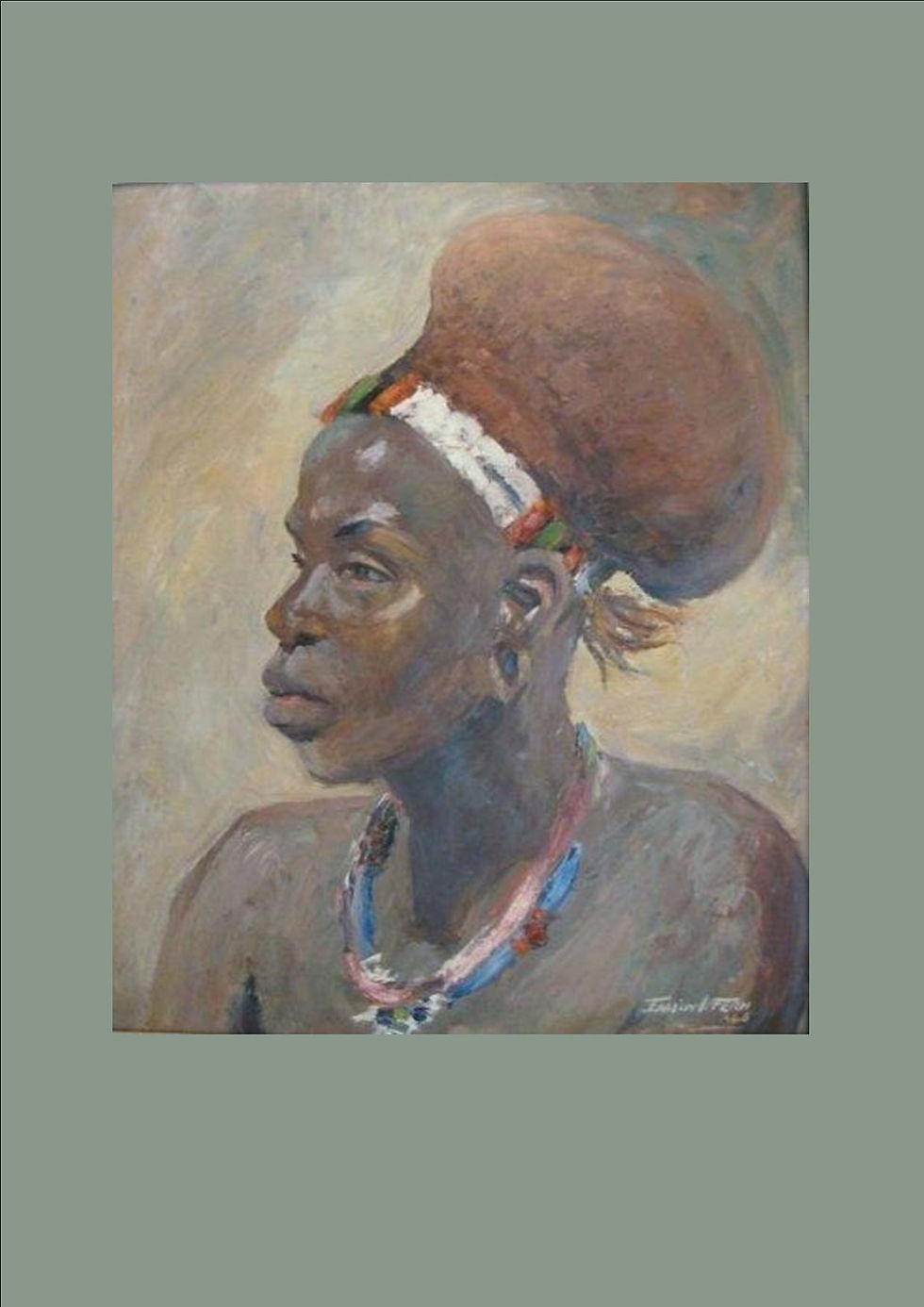
Oil on canvas Signed 32 x 39 cm
Oil on canvas Signed 32 x 39 cm

Oil on board 44 cm x 45 cm
Oil on board 44 cm x 45 cm

Oil on Canvas Dated 2012 75 cm x 57cm
Oil on Canvas Dated 2012 75 cm x 57cm

Oil Signed .Titled 88 x 120 cm
Oil Signed .Titled 88 x 120 cm

Mixed Media and Collage on canvas Signed Dated 16 163 cm x 160 cm
Mixed Media and Collage on canvas Signed Dated 16 163 cm x 160 cm
Mixed Media and Collage on canvas Signed Dated 16 163 cm x 160 cm

Oil on canvas Signed 53 x 106 cm

Acrylic on Board Signed 44 cm x 40 cm
Acrylic on Board Signed 44 cm x 40 cm

Colour Pencil on Paper Signed 16 cm x 11 cm
High Fired Pottery 27.5 cm x 18.7 cm x 18.7 cm

Signed Oil 24 cm x 35 cm
Contemporary South African Art
Makhoba, Trevor
Born in Cato Manor in 1956 Trevor grew up in Umlazi and received no formal art training. But this has not inhabited his career as an artist. His tremendous natural talent flourished. His paintings were flamboyant and professional. His vision was unique. Jo Thorpe, the founder of The African Art Centre, realised the Trevor's had an original vision and encouraged him throughout. Trevor was primarily a painter, whose vision made acerbic comments on our society, sometimes using black humour to make his point.
He used oils, acrylic, pen and pastel. He lived and worked in Umlazi.
His solo shows are too numerous to mention. Makhoba held many local exhibitions, most of them at the African Art Centre with which he remained in close touch throughout his career, but he also had shows in all major centres and overseas. Highlight of his career was being named Standard Bank Young Artist Award in 1996. He exhibited in Rome, Stuttgart, London and New York.
As artist and teacher Makhoba's influence has been considerable, He found his own style at an early age and his works were sometimes described as surreal. His subject matter was derived from his immediate surroundings.
He painted - in his own words - 'the history of blacks in this country from the hardships and all those things that happened to me and others.' Throughout his life he remained concerned with the social ills of the past Makhoba leaves a great legacy. Not only his oeuvre, but also the many artists he taught to paint.
His last solo show was the NSA Galleries in 2001. Many of his works were sold to foreigners who recognised his unique talent. Makho
BIBLIOGRAPHY
Andy Mason, Trevor Makhoba: More Agony than Ecstasy,
Trevor Makoba Memorial Exhibition catalogue, 2005,
Durban Art Gallery: Durban, p 49
Juliette Leeb-du Toit, Trevor Makhoba’s Narratives and
Mores: a Dialectics of Artistic and Intellectual Leadership,
2005, in op, cit, p 37
Bruce Campbell Smith, Hamba Kahle Umfowethu. Memories, Insights and Anecdotes: A Tribute to Phila Trevor Makhoba,
Trevor Makoba Memorial Exhibition catalogue, 2005, Durban Art Gallery: Durban, p 24
http://www.revisions.co.za/biographies/trevor-makhoba/
http://en.wikipedia.org/wiki/Fall_of_Man
Article Credits to http://www.artthrob.co.za/03mar/news/makhoba.html

Oil on paper 50 x 63 cm Signed and dated bottom right
The Garden of History
In this Makhoba painting, ‘In the garden of history’, a Zulu man in full traditional regalia receives a book from a scantily clad young European woman – the viewer is offered
a modern day take on the original fall of man, when Eve presented Adam with the forbidden fruit from the tree of the knowledge of good and evil. The artist juxtaposes two cultures; a traditional African culture represented by a Zulu warrior with his guard down; literally standing on his shield, and the Western culture, symbolized by a typical temptress, a Delilah of sorts. Delilah – meaning [She who] weakened
or uprooted or impoverished in Hebrew – was the downfall of Samson, according to the Bible, and is here posed to be the downfall of the Zulu culture.
The artist makes reference to Zulu customs and traditions by placing a clay beer pot,
used in celebratory ceremonies to honour ancestral spirits, between the two figures. The colonial ideal of converting Africans to Western / European religions and customs, here symbolized by the handing over of the book, threatens the future of these African traditions.
The composition is framed by two pillars of stacked skulls – a possible reference to the pillars that a blinded Samson reputedly pulled down in a final act of faith to wipe out his enemies. It alerts the viewer to the inherent danger of this liaison, which could have fatal consequences for African culture and customs – as has historically been proven.
Central to the composition is a stairway to heaven in the garden – a symbol of the quest for moral upliftment and enlightenment; of rising above the temptation and overcoming the potential threat of extinction. The painting does not offer any
suggestion as to what the outcome of this interaction will be – it merely sounds a warning, and questions the potential gains or advantages of accepting the ‘gift’

Oil on canvas Signed 75 x 50 cm
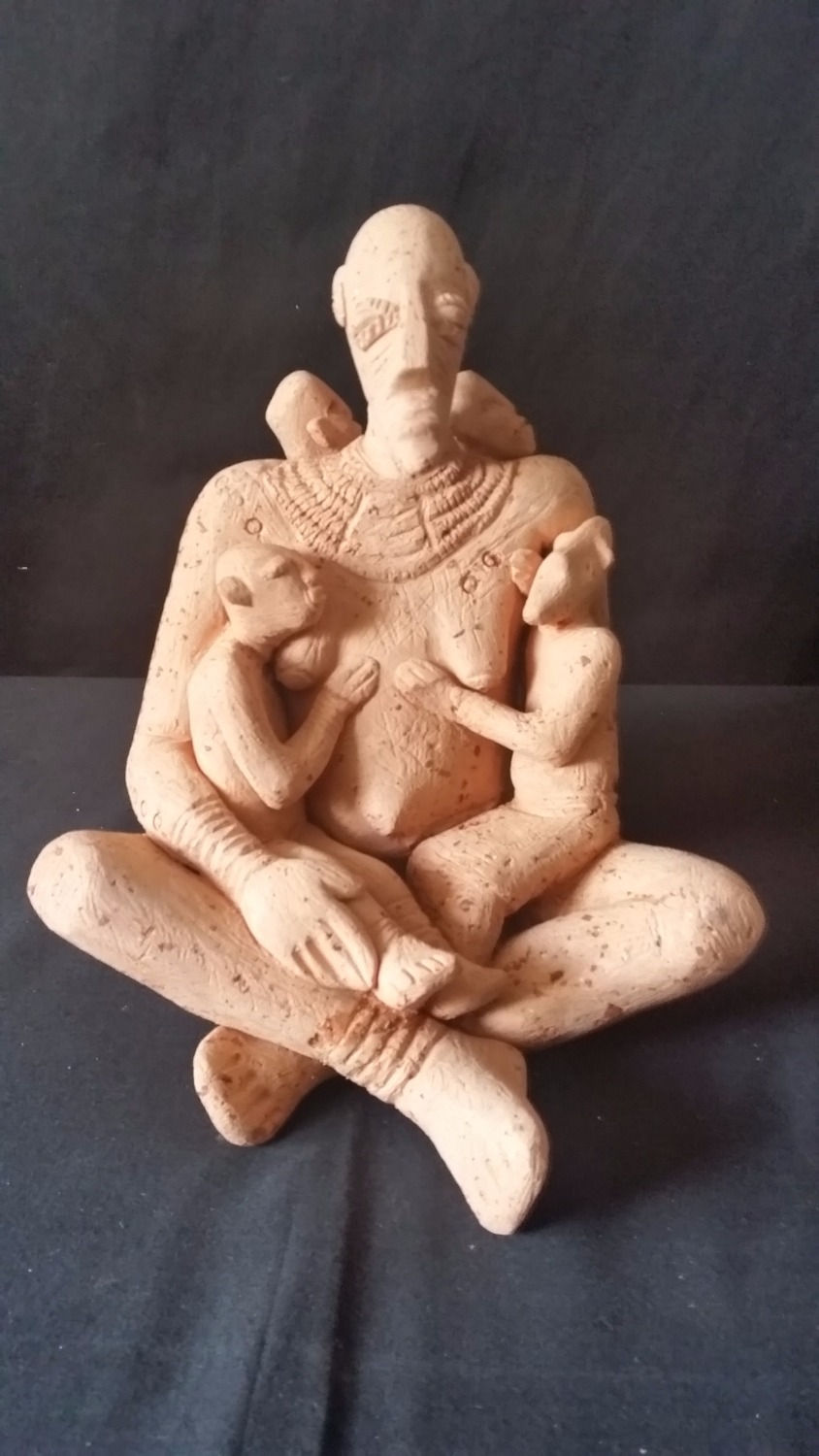
29 cm Tall

Oil Canvas on Board 60 cm x 90 cm

Oil on Board Signed and Dated 64.5 cm x 69 cm

Oil on Canvas Board Signed Dated 96 40 x 29 cm
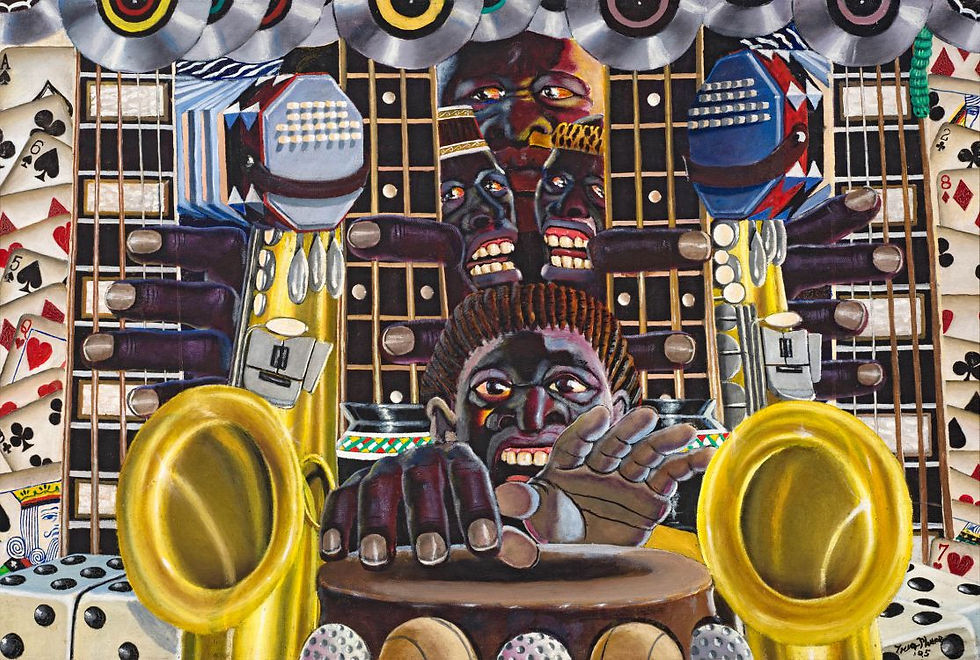
Oil on canvas board Signed '95 60 cm x 90.5 cm

Oil on Paper 49 cm x 70 xm

33 cm Tall

Oil on Canvas Board Signed 55 cm x 70 cm

Oil on Board 49 cm x 74 cm Signed and dated bottom right

Oil on Card Signed 70 cm x 50 cm
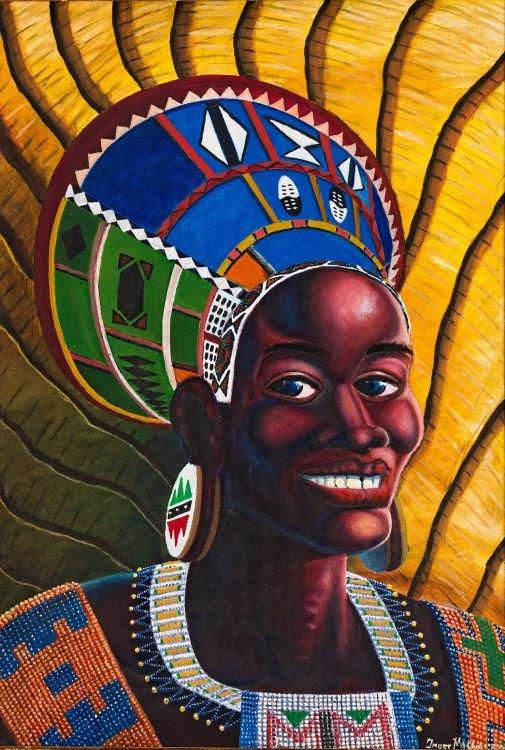
Oil on Card Signed Dated 2000 80.5 cm x 54.5 cm
Oil on Card 70 cm x 50 cm

Oil on Board Signed Unframed 60 cm x 80 cm
Special Prescription
Provenance: Campbell Smith Collection, Cape Town.
ABOUT THE ARTWORK:
In October 2022, the Norval Foundation mounted a review exhibition Congress: The Social Body in Three Figurative Painters. George Pemba, Trevor Makhoba, Stembiso Sibisi. Curated by Sean O’Toole, the exhibition focused on three social realist artists from different eras, while also once again putting the spotlight on the work of Makhoba and the valuable achievements of ReVisions: Expanding the Narrative of South African Art in exhibiting and publishing a substantial amount of the work on the late Durban artist.
Drawing on his experiences of life and contemporary events in KwaZulu-Natal, “Makhoba’s unique vision melds cultural memory and moral fervour with satire and social commentary. His compositions are noteworthy for their inventive design and visual punch that challenge bland characterisations of his work as social realist” (1) writes O’Toole.
As the title suggests, Special Prescription is a comical introduction – or description – of the narrative scene in the painting. Here, referring to the carnal act that is taking place between the nurse and patient in a (state) hospital setting, at night time, while another patient is voyeuristically looking at them.
Makhoba is noted for his willingness to tackle complicated and risqué social subjects in his paintings - ranging from gender issues, contemporary histories and the influence of indigenous religious beliefs, and sexual taboos, crime to the HIV/AIDS pandemic – in an ironic, unapologetic and uncensored way.
Trevor Makhoba’s paintings, particularly his mature works (from the 1990s and 2000s), like Special Prescription are rare and seldom come to the market.
Text by Marelize van Zyl Lot 15 - Trevor Makhoba (South Africa 1956-2003) (aspireart.net)