
Oil on canvas Signed 53 x 106 cm
Oil on canvas Signed 53 x 106 cm
Oil on canvas Signed 53 x 106 cm
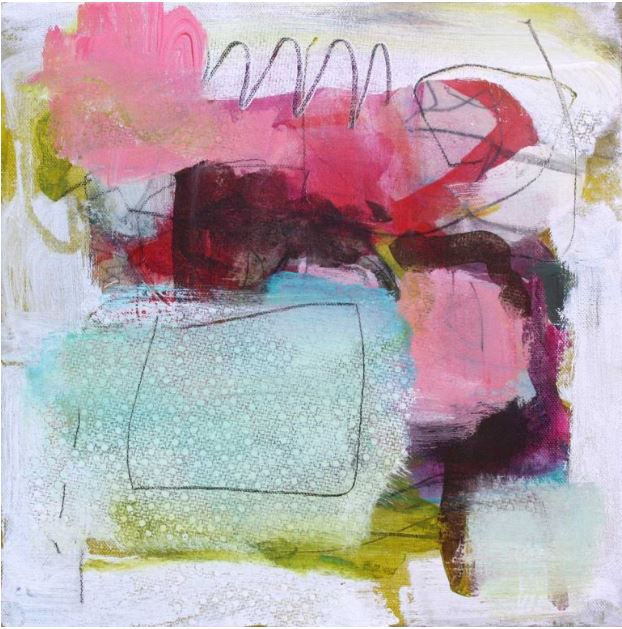
Acrylic on canvas 30.5 x 30.5 cm
Acrylic on canvas 30.5 x 30.5 cm
Acrylic on canvas 30.5 x 30.5 cm
Acrylic on canvas 30.5 x 30.5 cm
Acrylic on canvas 30.5 x 30.5 cm
Oil on canvas Signed 53 x 106 cm

Oil on Canvas 47.6 x 48.3 cm
Oil on Canvas 47.6 x 48.3 cm

Gouache on Paper 75 x 55 cm

Gouache on Paper 75 x 55 cm
Gouache on Paper 75 x 55 cm
Gouache on Paper 75 x 55 cm

Acrylic on Canvas 91.4 cm x 61 cm Signed lower right; titled and dated verso; unframed
Acrylic on Canvas 91.4 cm x 61 cm Signed lower right; titled and dated verso; unframed
Acrylic on Canvas 91.4 cm x 61 cm Signed lower right; titled and dated verso; unframed
Acrylic on Canvas 91.4 cm x 61 cm Signed lower right; titled and dated verso; unframed

Acrylic on Canvas 91.4 cm x 61 cm Dated 1996 Signed lower right, Titled and dated verso, Unframed
Northwest Coast
Inuit Sculpture Artist Unknown

Sedna Soapstone
Sedna Soapstone

High Fired Pottery 27.5 cm x 18.7 cm x 18.7 cm

Acrylic Painted Skull 44 cm x 20 cm

Oil on canvas Signed; Numbered 12-06 76 x 58 cm
Oil on canvas Signed; Numbered 12-06 76 x 58 cm
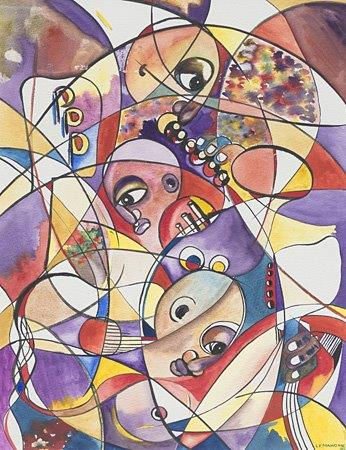
Watercolor Signed Dated 1993 36 x 28cm
Watercolor Signed Dated 1993 36 x 28cm
Watercolor Signed Dated 1993 36 x 28cm
Watercolor Signed Dated 1993 36 x 28cm

Rosewood Tables 78 cm x 150 cm x 54.5 cm
Rosewood Tables 78 cm x 150 cm x 54.5 cm
Rosewood Tables 78 cm x 150 cm x 54.5 cm
Rosewood Tables 78 cm x 150 cm x 54.5 cm
Rosewood Tables 78 cm x 150 cm x 54.5 cm
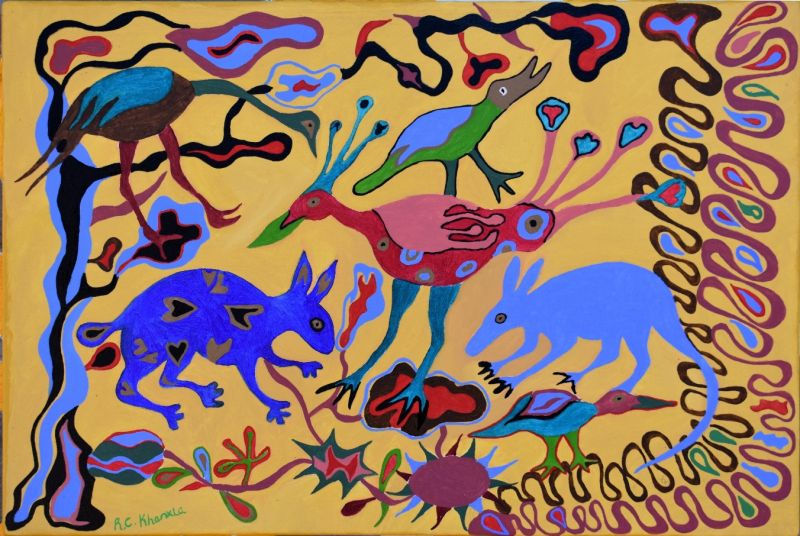
Oil on canvas 57.2 x 85.5 cm

Oil on Board Signed Dated 1962 90 cm x 65 cm
Oil on Board Signed Dated 1962 90 cm x 65 cm

Coloured pencil on paper 24.1 x 18.4 cm 2015
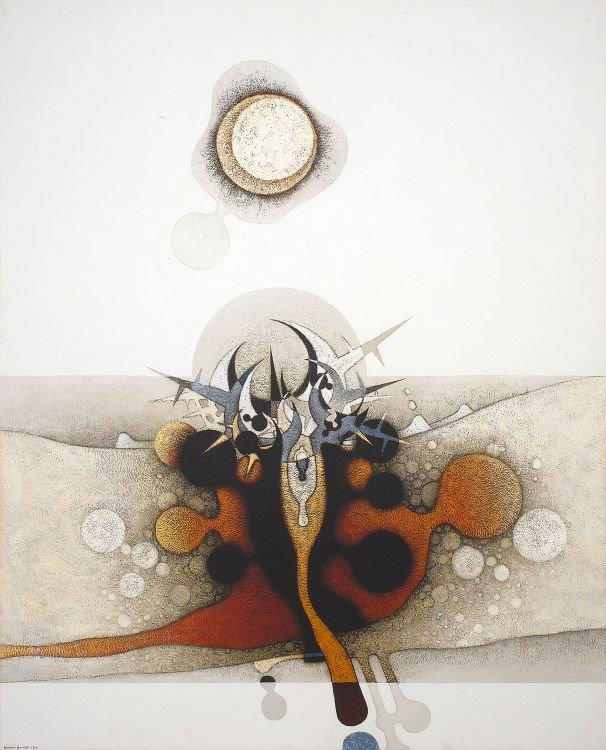
Sunburst Mixed Media on Board 122.5 x 99 cm
Sunburst Mixed Media on Board 122.5 x 99 cm
Bobbie Burgers
Bobbie Burgers is a contemporary Canadian painter. Her lush and Expressionistic depictions of flowers teeter on the verge of abstraction, bursting with bright color and laden with thickly applied, textural paint. “Flowers, to me, are the opposite of still,” the artist has explained. “Changing from minute to minute, they are perfect symbols for life, death, yearning, and beauty. My brushstrokes are layered with my own internal charges, depicting anger, frustration, softness, wanting, and more.” Born in 1973 in Vancouver, Canada, she studied Art History at the University of Victoria in British Columbia. Her work has been exhibited widely at home and abroad, notably including Art Market San Francisco and Equinox Gallery. Today, her works are in the collections of the Berost Corporation in Toronto and the Royal Bank of Canada, among others. Burgers lives and works in Vancouver, Canada.
Bobbie Burgers
Bobbie Burgers is a contemporary Canadian painter. Her lush and Expressionistic depictions of flowers teeter on the verge of abstraction, bursting with bright color and laden with thickly applied, textural paint. “Flowers, to me, are the opposite of still,” the artist has explained. “Changing from minute to minute, they are perfect symbols for life, death, yearning, and beauty. My brushstrokes are layered with my own internal charges, depicting anger, frustration, softness, wanting, and more.” Born in 1973 in Vancouver, Canada, she studied Art History at the University of Victoria in British Columbia. Her work has been exhibited widely at home and abroad, notably including Art Market San Francisco and Equinox Gallery. Today, her works are in the collections of the Berost Corporation in Toronto and the Royal Bank of Canada, among others. Burgers lives and works in Vancouver, Canada.
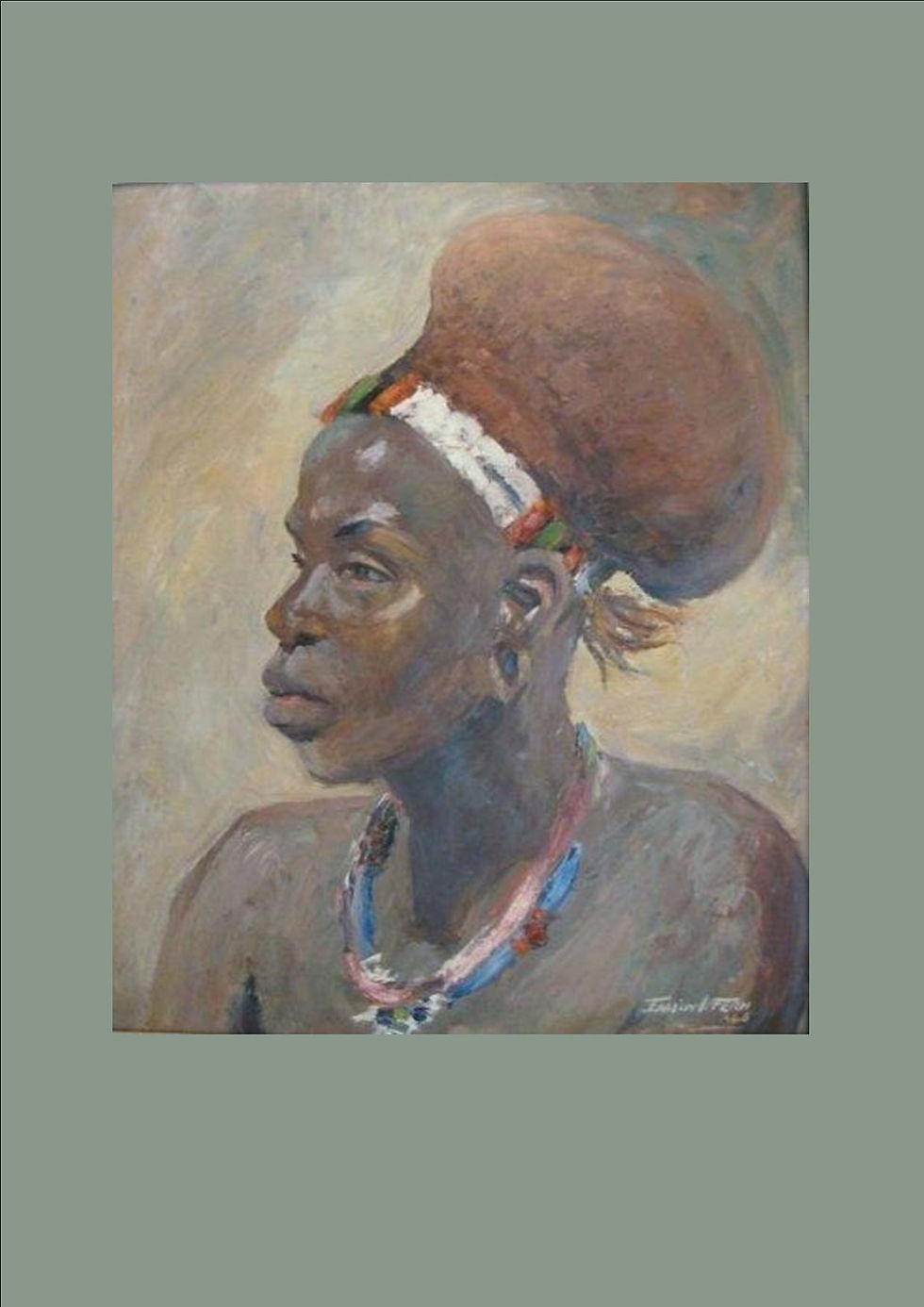
Oil on canvas Signed 32 x 39 cm
Oil on canvas Signed 32 x 39 cm

Oil on board 44 cm x 45 cm
Oil on board 44 cm x 45 cm

Oil on Canvas Dated 2012 75 cm x 57cm
Oil on Canvas Dated 2012 75 cm x 57cm

Oil Signed .Titled 88 x 120 cm
Oil Signed .Titled 88 x 120 cm

Mixed Media and Collage on canvas Signed Dated 16 163 cm x 160 cm
Mixed Media and Collage on canvas Signed Dated 16 163 cm x 160 cm
Mixed Media and Collage on canvas Signed Dated 16 163 cm x 160 cm

Oil on canvas Signed 53 x 106 cm

Acrylic on Board Signed 44 cm x 40 cm
Acrylic on Board Signed 44 cm x 40 cm

Colour Pencil on Paper Signed 16 cm x 11 cm
High Fired Pottery 27.5 cm x 18.7 cm x 18.7 cm

Signed Oil 24 cm x 35 cm
Contemporary South African Art
Kruger, Braam
Born: 1950 Boksburg, Transvaal
A painter, sculptor and graphic artist, working in oil, acrylic, watercolour, gouache, ink, wash, pencil, enamel, charcoal, wood, ceramics, the encaustic processes and in various graphic media.
1982 three dimensional paintings in plastic; 1985 “Batman” series;
1985-86 “Black” paintings;
1987 working on a series of paintings with Simon Stone.
Studies: 1974-79 Pretoria Technical College (Technikon), under Gunther van der Reis, gaining a Teachers Diploma in Art; 1980 Frans Masereel Centrum voor Grafiek, Kasterlee, Belgium.
Profile: From 1979 a member of the SAAA; 1984 founder of the SA Alternative Monuments Commission. 1984 a lecturer in painting, Cape Technikon. 1977 produced a series of etchings illustrating Laatnagvrese, a book of poems by Wessel Pretorius; 1986 illustrations and cover of a book of short stories by Jan Strydom. 1970 a scenic painter for PACT. Has lived in the Cape Province and presently in Johannesburg. 1978 visited New York; 1979 Paris; 1979-80 in Antwerp, Belgium.
Exhibitions: He has participated in numerous group exhibitions from 1974 in SA, West Germany, Belgium and the USA; 1975 own studio, Pretoria, first of c.20 solo exhibitions, one of which was held in Belgium; 1978 Rand Afrikaans University, solo exhibition; 1979 exhibition of pottery and ceramics; 1985 Cape Town Triennial; 1987 Johannesburg Art Gallery, Vita Art Now.
Represented: Belleville Municipal Gallery; Pietersburg Collection; Pretoria Art Museum; Pretoria Technikon; SA National Gallery, Cape Town; Sterckshof Museum, Antwerp, Belgium; Ministry for Culture, Belgium; University of Natal; University of Pretoria; Walter Battiss Museum, Somerset East; Willem Annandale Art Gallery, Lichtenburg.
Public Commissions: 1974 mural for the Pretoria Technical College; 1983-84 portrait for the SA Nursing Council.
References: 3Cs; AASA; Style March 1985; De Kat April 1986; SA Arts Calendar Winter 1986

Charcoal & colored pencil on paper Signed, dated '96 59 x 41.5 cm

Oil on Board Signed Kruger 41 155 cm x 116 cm
Baragwanathi
As is with most of Braam Jruger's paintings, this work is iconographically crammed to the point that one cannot simply look twice. Known for his deliberate attempts to mislead 'academic interpretations', Kruger cherished obscurity and the absurd. In an obituary published in 2009. Sean O'Toole describes his bizaare paintings: "Encompassing a variety of styles, they range from the fancifully pop and romantically expressionist to the plainky kitsch. Sometimes flippant, other times gaudy, it is the painter's off-kilter, magpie sensibility that, perhaps, best defines the essence of his appeal". In Baragwanathi, we are indeed presented with a series of shiny things. For a viewer familiar with art historical canons, the most recognisable is the nude female figure who is quoted almost directly from Jean-Auguste-Dominique Ingre's famous painting The Valpincon Bather made in 1808. Seated on a bed facing away from the viewer, the study is most closely focused on the flesh of the woman's back, which is expertly rendered despite the challenge of capturing such subtle form. Poet and art critic, Charles Baudelaire noted the "deep voluptuousness" of the figure but also associated timeless and immobile figure with chasity and restraint. In Kruger's quotation, he mimics Ingres' virtuosity and form, though adds a layer of faint cracks, emphasising the act of imitation. Other elements of the Ingres are also transported into Kruger's painting: the immaculately rendered and detailed drapery of curtains, that give a sense of the theatrical, the light source which is made tangible through a direct spotlight piercing in the sky in the background.
Disrupting the quotation of the bather, however, is a cheeky inclusion of Kruger's self-portrait, peeking out from under the woman's bed. His signature shoulder-length hair and bushy beard are unmistakable and he folds his arms to rest his chin in his hands with a sense of smug accomplishment. We don't see much of his body, but he is presumably nude as well. Kruger was well kown for his fondness of women and in this self-portrait, he looks out at the viewer knowingly, as if he's seen more than the chaste back of Ingres' muse.
Linked in theme, but starkly juxtaposed in style are a pair of armoured rams, painted in a much looser, and less mimetic style. Kruger often inserted animal figures into his paintings and they are perhaps best understood as his alter egos. The ram is commonly associated with virility and in this figuration the silvery animal bows in front of Kruger with a subtle, but playful smirk.
Again, juxtaposed in a surrealistic way with the rest of the painting is a detailed background scene. Though classical in its depiction of rolling hills and a winding stream, the idyllic scene is interrupted by a smoking coal-fired power plant. They hazy horizon has palpable smog hanging over it and in this context, the hole in the sky reads almost as a disruption to the ozone layer indicating a serious threat to the environment.
Kruger's work indeed resists a simple interpretation with each of these elements and it is further annexed by a large gilrt frame and scalloped inset. Working closely with framers, Kruger often added detailed frams as a final element to his paintings, which accentuate the postmodern self-consciousness of his work.
In the bottom right-hand corner, Kruger signs the artwork with his age rather than the year. Having given up full-time painting in the early 1990's, Kruger resumed his practice after suffering a stroke in 2000. This marked a different period in the artist's oeuvre and from here on, he marks the paintings with yet another self-reference.