
Oil on canvas Signed 53 x 106 cm
Oil on canvas Signed 53 x 106 cm
Oil on canvas Signed 53 x 106 cm
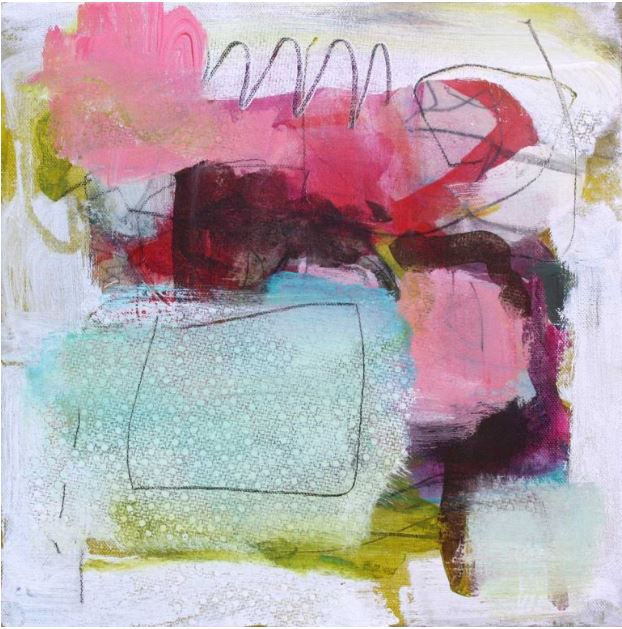
Acrylic on canvas 30.5 x 30.5 cm
Acrylic on canvas 30.5 x 30.5 cm
Acrylic on canvas 30.5 x 30.5 cm
Acrylic on canvas 30.5 x 30.5 cm
Acrylic on canvas 30.5 x 30.5 cm
Oil on canvas Signed 53 x 106 cm

Oil on Canvas 47.6 x 48.3 cm
Oil on Canvas 47.6 x 48.3 cm

Gouache on Paper 75 x 55 cm

Gouache on Paper 75 x 55 cm
Gouache on Paper 75 x 55 cm
Gouache on Paper 75 x 55 cm

Acrylic on Canvas 91.4 cm x 61 cm Signed lower right; titled and dated verso; unframed
Acrylic on Canvas 91.4 cm x 61 cm Signed lower right; titled and dated verso; unframed
Acrylic on Canvas 91.4 cm x 61 cm Signed lower right; titled and dated verso; unframed
Acrylic on Canvas 91.4 cm x 61 cm Signed lower right; titled and dated verso; unframed

Acrylic on Canvas 91.4 cm x 61 cm Dated 1996 Signed lower right, Titled and dated verso, Unframed
Northwest Coast
Inuit Sculpture Artist Unknown

Sedna Soapstone
Sedna Soapstone

High Fired Pottery 27.5 cm x 18.7 cm x 18.7 cm

Acrylic Painted Skull 44 cm x 20 cm

Oil on canvas Signed; Numbered 12-06 76 x 58 cm
Oil on canvas Signed; Numbered 12-06 76 x 58 cm
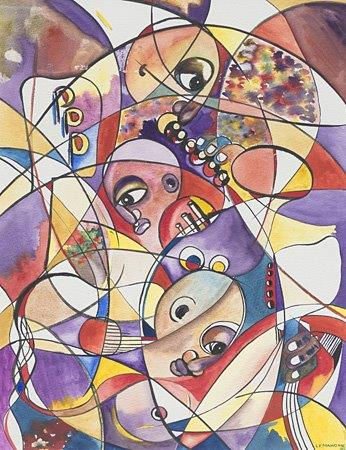
Watercolor Signed Dated 1993 36 x 28cm
Watercolor Signed Dated 1993 36 x 28cm
Watercolor Signed Dated 1993 36 x 28cm
Watercolor Signed Dated 1993 36 x 28cm

Rosewood Tables 78 cm x 150 cm x 54.5 cm
Rosewood Tables 78 cm x 150 cm x 54.5 cm
Rosewood Tables 78 cm x 150 cm x 54.5 cm
Rosewood Tables 78 cm x 150 cm x 54.5 cm
Rosewood Tables 78 cm x 150 cm x 54.5 cm
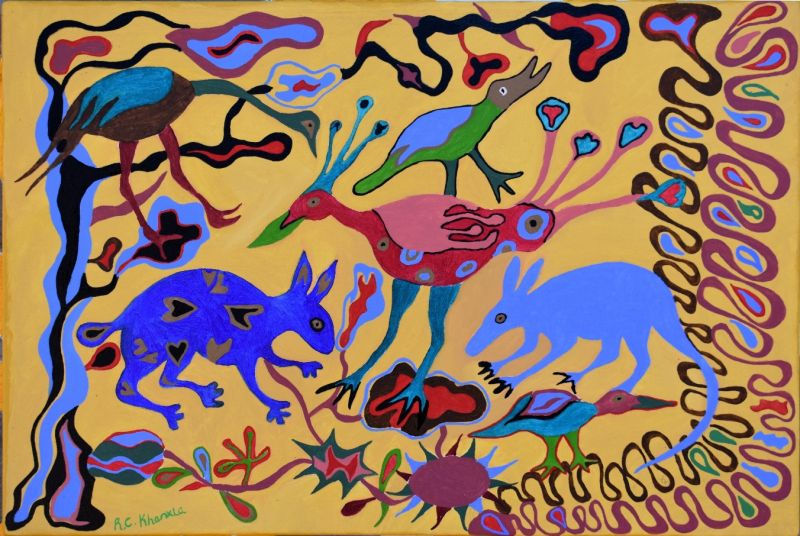
Oil on canvas 57.2 x 85.5 cm

Oil on Board Signed Dated 1962 90 cm x 65 cm
Oil on Board Signed Dated 1962 90 cm x 65 cm

Coloured pencil on paper 24.1 x 18.4 cm 2015
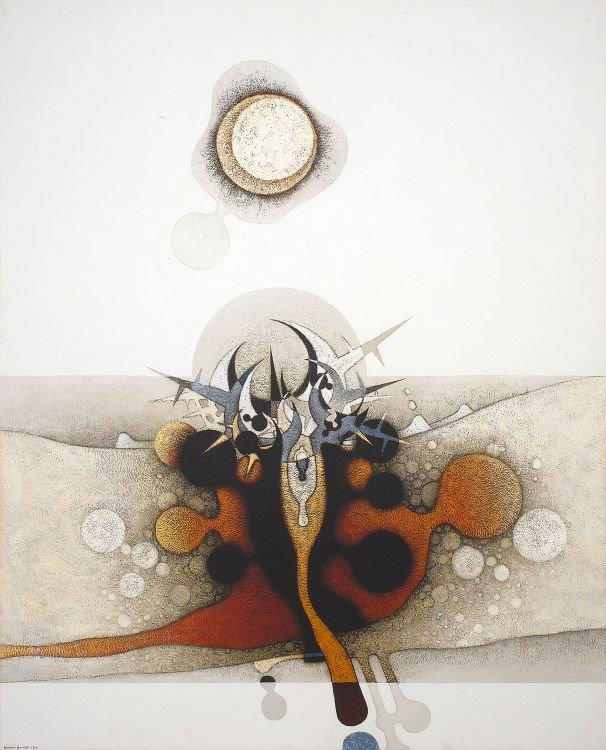
Sunburst Mixed Media on Board 122.5 x 99 cm
Sunburst Mixed Media on Board 122.5 x 99 cm
Bobbie Burgers
Bobbie Burgers is a contemporary Canadian painter. Her lush and Expressionistic depictions of flowers teeter on the verge of abstraction, bursting with bright color and laden with thickly applied, textural paint. “Flowers, to me, are the opposite of still,” the artist has explained. “Changing from minute to minute, they are perfect symbols for life, death, yearning, and beauty. My brushstrokes are layered with my own internal charges, depicting anger, frustration, softness, wanting, and more.” Born in 1973 in Vancouver, Canada, she studied Art History at the University of Victoria in British Columbia. Her work has been exhibited widely at home and abroad, notably including Art Market San Francisco and Equinox Gallery. Today, her works are in the collections of the Berost Corporation in Toronto and the Royal Bank of Canada, among others. Burgers lives and works in Vancouver, Canada.
Bobbie Burgers
Bobbie Burgers is a contemporary Canadian painter. Her lush and Expressionistic depictions of flowers teeter on the verge of abstraction, bursting with bright color and laden with thickly applied, textural paint. “Flowers, to me, are the opposite of still,” the artist has explained. “Changing from minute to minute, they are perfect symbols for life, death, yearning, and beauty. My brushstrokes are layered with my own internal charges, depicting anger, frustration, softness, wanting, and more.” Born in 1973 in Vancouver, Canada, she studied Art History at the University of Victoria in British Columbia. Her work has been exhibited widely at home and abroad, notably including Art Market San Francisco and Equinox Gallery. Today, her works are in the collections of the Berost Corporation in Toronto and the Royal Bank of Canada, among others. Burgers lives and works in Vancouver, Canada.
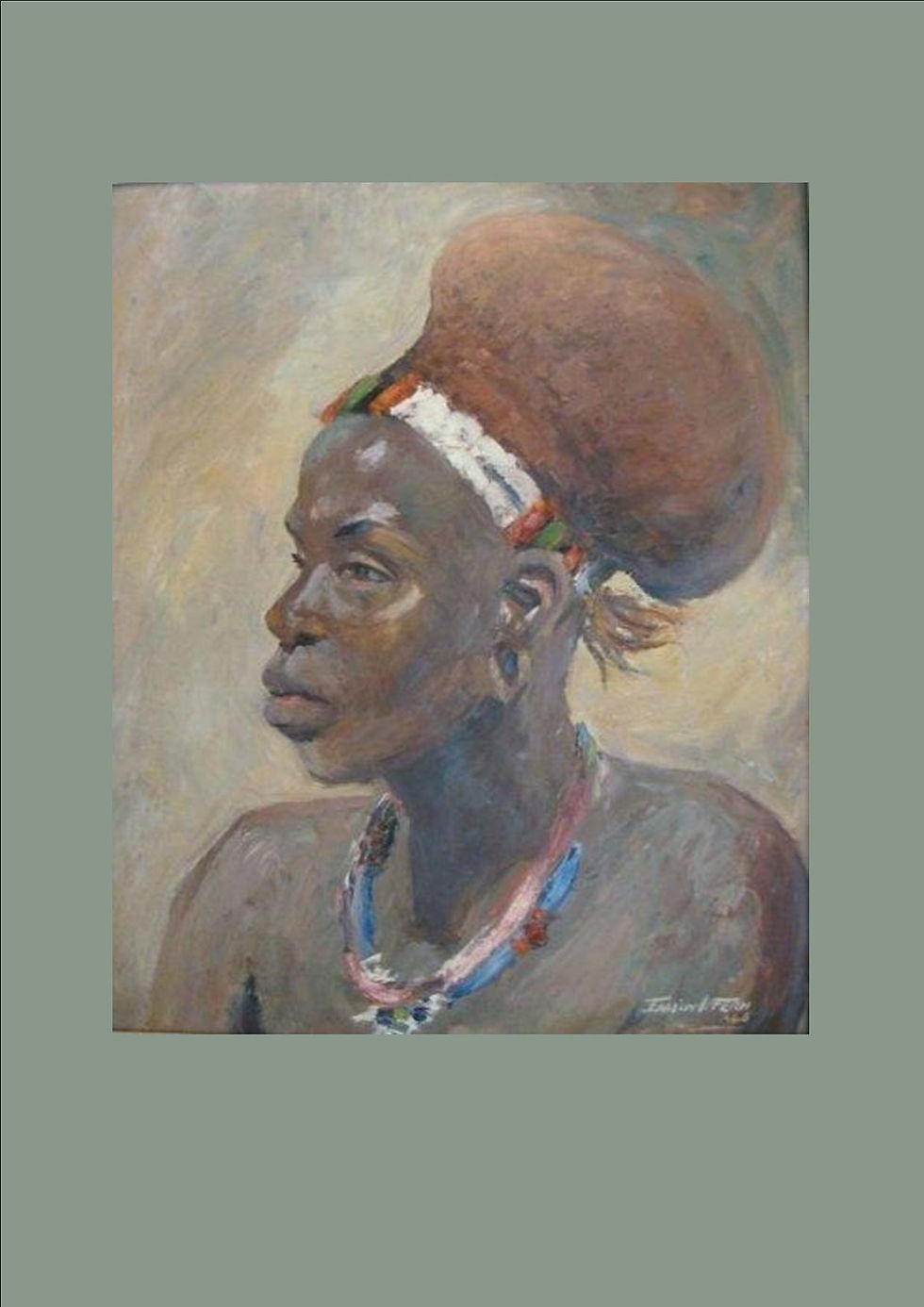
Oil on canvas Signed 32 x 39 cm
Oil on canvas Signed 32 x 39 cm

Oil on board 44 cm x 45 cm
Oil on board 44 cm x 45 cm

Oil on Canvas Dated 2012 75 cm x 57cm
Oil on Canvas Dated 2012 75 cm x 57cm

Oil Signed .Titled 88 x 120 cm
Oil Signed .Titled 88 x 120 cm

Mixed Media and Collage on canvas Signed Dated 16 163 cm x 160 cm
Mixed Media and Collage on canvas Signed Dated 16 163 cm x 160 cm
Mixed Media and Collage on canvas Signed Dated 16 163 cm x 160 cm

Oil on canvas Signed 53 x 106 cm

Acrylic on Board Signed 44 cm x 40 cm
Acrylic on Board Signed 44 cm x 40 cm

Colour Pencil on Paper Signed 16 cm x 11 cm
High Fired Pottery 27.5 cm x 18.7 cm x 18.7 cm

Signed Oil 24 cm x 35 cm
Contemporary South African Art
Everard, Bertha
Bertha Everard was born in Durban, South Africa 1873 - 1965
Always restless and fiercely independent, the spirited Bertha was determined to raise her children according to her own non-conformist principles and insisted that they would not attend formal schooling. Their education would often include accompanying their mother on lengthy (sometimes weeks long) painting excursions into unexplored terrain by ox wagon. They would later be joined on these artistic "safari" adventures by their beloved aunt Edith who had become by then the headmistress of Eunice School in Bloemfontein
Bertha's powerful works painted on these trips capture the solitude and mystery of the African veld, accentuating the overwhelming enormity of the environment. They are brooding, poignant landscapes usually captured at dusk as the strong African light sinks and fades, casting its glow on the still warm, golden, dry hills and veld. Some show dusty ribbons of road or slow, snaking rivers leading the viewer, as though a traveller, through remote hills and gloomy valleys into the twilight.
Art Education
- 1888 – 1890 Bertha Everard trained as a concert-pianist in Vienna, where she first started painting seriously.
- 1891 Bertha Everard studied art under Sir Hubert Herkomer at Bushey.
- 1893 Bertha Everard studied art at Slade and Westminister Schools,
London, under Mouat; St Ives School of Landscape, Cornwall.
- 1925 – 1926 Studied art informally in Paris.
Short Artist Biography
- Educated in England;
- 1891 – 1901 Bertha Everard showed a talent for portraiture while studying
in London, but concentrated on landscape painting from the time she
worked in Cornwall; taught art at Walthamstow Hall, Sevenoaks, Kent;
several works hung on the line at Royal Academies - Wild Parsley bought
for Wednesbury Permanent Gallery (since resold).
- 1902 Bertha Everard returned to South Africa with Milner Teachers
following the Anglo-Boer War; taught at Pretoria High School for Girls.
- 1903 Married CJ Everard, with whom she subsequently settled on the
farm ‘Bonnefoi’, in the Carolina district of the Eastern Transvaal.
- 1910 The ‘Star’, 25 March 1910, hails “the discovery of a new South
African painter” when Bertha Everard won the Gold Medal for an oil
landscape, Mid-Winter on the Komati River (Peace of Winter), at the
South African National Union art exhibition organized in Johannesburg by
Florence Phillips.
- 1917 Elected a member of South African Society of Artists.
- 1922 – 1926 Bertha Everard took her family to Europe to study; lived in
England and in Paris, during which time she painted actively, exhibited
on the Paris Salon and was influenced by post-Impressionist styles.
- 1926 Bertha Everard returned to South Africa and a life of painting on the
farm; painted exclusively in oils. Four of her paintings, Peace of Winter in
the Johannesburg Art Gallery; Moonrise, Transvaal; On The Banks of the
Komati; and Delville Wood, in the Pretoria Art Museum, were reproduced
by the Medici Society. Peace of Winter was subsequently republished by
E Schweikerdt, Pretoria.
Art Exhibitions
- Bertha Everard exhibited on the Royal Academy prior to 1902 and again
in 1911 and 1923;
- 1910 SANU Exhibition of Arts and Grafts, Wanderers’ Club,
Johannesburg. Exhibited on annual exhibitions of South Africa Provincial
Art Societies.
- 1916 First one-man exhibition, Bloemfontein.
- 1924 South African Section, British Empire Exhibition, Wembley; Paris
Salon.
- 1926 Paris Salon.
- 1936 Empire Exhibition, Johannesburg;
- 1952 Van Riebeeck Tercent Exhibition, Cape Town. Various exhibitions
of the Everard Group during her life-time.
- 1967 Prestige Retrospective exhibition – ‘The Everard Group’, Pretoria
Art Museum.
Public Art collections
- South African National Art Gallery, Cape Town; Johannesburg Art
Gallery; Pretoria Art Museum; Durban Art Gallery; Tatham Art Gallery,
Pietermaritzburg; Libertas; William Humphreys Art Gallery, Kimberley; National Museum, Bloemfontein; Libertas, Pretoria; Rand Mines,
Johannesburg; South African House, London.
Source
Berman, E. 1994. Art & Artists of South Africa . Southern Book Publishers.
Ref: http://www.everard-group.com/pageBertha.htm

Oil on Canvas Artist Name and Title on Reverse 29 cm x 23 cm
Everard Group Artists
http://www.everard-group.com/page3.htm
The Everard Group is a family of renowned South African Artists, spanning four generations over a period of more than 100 years, in a remote corner of the African highveld in the early 1900's, and continues to this day.
The works of the Everards hang in all major South African National Art Galleries including Cape Town, Johannesburg, Pretoria, Durban, Pietermaritzburg, Port Elizabeth, East London, Bloemfontein and Kimberley, as well as collections abroad including Africa House in London.
The group originally consisted of 4 members, beginning with Bertha Everard, her sister Edith King and her two daughters Ruth and Rosamund. It continued to grow to the next immediate generation with Ruth's daughter Leonora Everard haden, and Leonora's daughter Nichola Leigh. Leonora along with her daughter continue to produce work to the present day.
Bertha and Edith arrived in South Africa, from England, at the turn of the last century, where they settled on the farm called Bonnefoi, which lies on the escarpment in Mpumalanga, where the highveld drops into steep valleys and gorges to the lowveld. This inspired their great interest and love of the African Landscape which continues to influence the artists today
A Brief History
Edith and Bertha King were born in South Africa during the Anglo/Zulu wars, the daughters of an impetuous and hot-headed captain in the British army; they were raised by their mother and educated in England.
At the turn of the century, they returned to South Africa as schoolteachers. By 1905, Bertha had married Charles Everard, a well-respected owner of a lively and busy trading store on the transport wagon route to Lydenberg in the old Transvaal province.
On the farm Bonnefoi in the remote, bleak and vast expanses of the Eastern Highveld escarpment overlooking the Komati valley, Bertha supervised the design and construction of a large, stately and dignified home. The baronial sized rooms displayed a strong influence of the British Arts and Crafts movement and were filled with furniture inspired by William Morris design. Here she raised her three children Ruth, Rosamund and Sebastian Everard. In later years the décor of the home would stretch to encompass the varied interests and tastes of the talented family and an exotic amalgamation of hunting trophies, African artefacts and Rosamund’s collection of North African and Egyptian treasures predominated.
Daily life on a South African farm in the early years of the twentieth century was very different to life in England and presented many difficulties to the educated, cultured and artistic Bertha. The rural community around her, African farm workers and local Boer farmers together with their families, did not share her European background and education, often causing her to feel culturally restricted and alienated. Despite her frustration and regular bouts of depression, Bertha's pioneering spirit enabled her to educate her children herself, supervise the working of the farmlands (a difficult task for a woman at the time), design and oversee the building of schools and churches for the African farm workers and their families - including a church for the local Anglican congregation in Carolina- and to create an artistic legacy as a pioneer of South African Modernism in painting.
What was extraordinary about the Everard Group artists was their ability to produce powerful, innovative work on an isolated farm, far removed from the hub of urban centres. Despite the negative criticism they received from a conservative public, unwilling to accept modern styles, the Everard artists continued to work with courage and conviction. Their pioneering work exists as a legacy to the development of modern art in South Africa.