
Oil on canvas Signed 53 x 106 cm
Oil on canvas Signed 53 x 106 cm
Oil on canvas Signed 53 x 106 cm
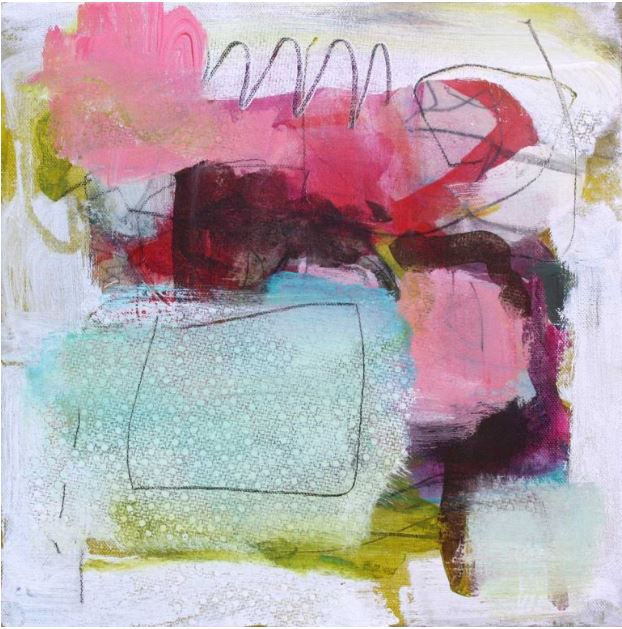
Acrylic on canvas 30.5 x 30.5 cm
Acrylic on canvas 30.5 x 30.5 cm
Acrylic on canvas 30.5 x 30.5 cm
Acrylic on canvas 30.5 x 30.5 cm
Acrylic on canvas 30.5 x 30.5 cm
Oil on canvas Signed 53 x 106 cm

Oil on Canvas 47.6 x 48.3 cm
Oil on Canvas 47.6 x 48.3 cm

Gouache on Paper 75 x 55 cm

Gouache on Paper 75 x 55 cm
Gouache on Paper 75 x 55 cm
Gouache on Paper 75 x 55 cm

Acrylic on Canvas 91.4 cm x 61 cm Signed lower right; titled and dated verso; unframed
Acrylic on Canvas 91.4 cm x 61 cm Signed lower right; titled and dated verso; unframed
Acrylic on Canvas 91.4 cm x 61 cm Signed lower right; titled and dated verso; unframed
Acrylic on Canvas 91.4 cm x 61 cm Signed lower right; titled and dated verso; unframed

Acrylic on Canvas 91.4 cm x 61 cm Dated 1996 Signed lower right, Titled and dated verso, Unframed
Northwest Coast
Inuit Sculpture Artist Unknown

Sedna Soapstone
Sedna Soapstone

High Fired Pottery 27.5 cm x 18.7 cm x 18.7 cm

Acrylic Painted Skull 44 cm x 20 cm

Oil on canvas Signed; Numbered 12-06 76 x 58 cm
Oil on canvas Signed; Numbered 12-06 76 x 58 cm
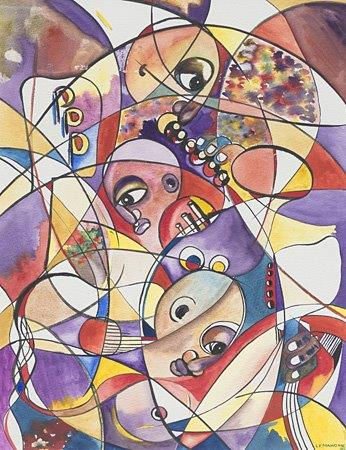
Watercolor Signed Dated 1993 36 x 28cm
Watercolor Signed Dated 1993 36 x 28cm
Watercolor Signed Dated 1993 36 x 28cm
Watercolor Signed Dated 1993 36 x 28cm

Rosewood Tables 78 cm x 150 cm x 54.5 cm
Rosewood Tables 78 cm x 150 cm x 54.5 cm
Rosewood Tables 78 cm x 150 cm x 54.5 cm
Rosewood Tables 78 cm x 150 cm x 54.5 cm
Rosewood Tables 78 cm x 150 cm x 54.5 cm
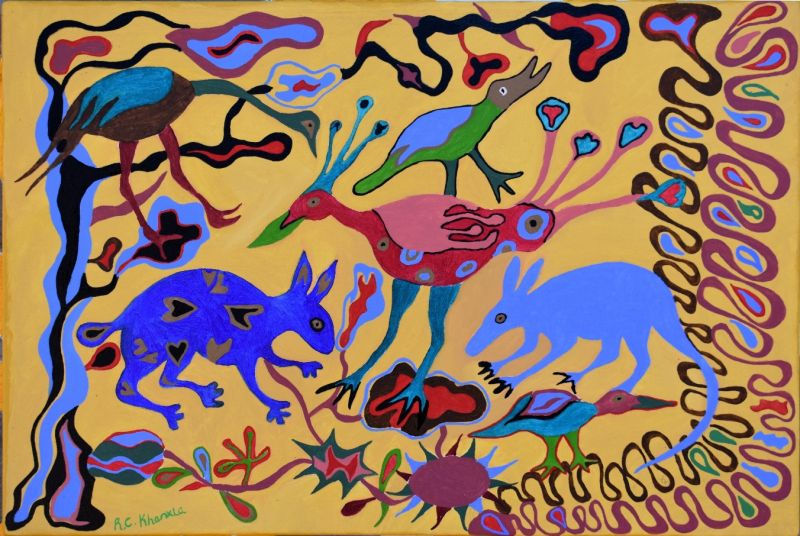
Oil on canvas 57.2 x 85.5 cm

Oil on Board Signed Dated 1962 90 cm x 65 cm
Oil on Board Signed Dated 1962 90 cm x 65 cm

Coloured pencil on paper 24.1 x 18.4 cm 2015
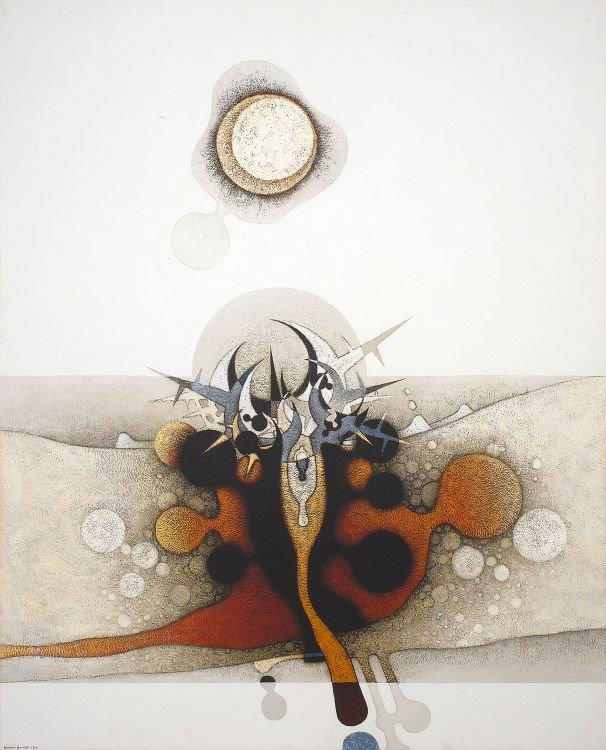
Sunburst Mixed Media on Board 122.5 x 99 cm
Sunburst Mixed Media on Board 122.5 x 99 cm
Bobbie Burgers
Bobbie Burgers is a contemporary Canadian painter. Her lush and Expressionistic depictions of flowers teeter on the verge of abstraction, bursting with bright color and laden with thickly applied, textural paint. “Flowers, to me, are the opposite of still,” the artist has explained. “Changing from minute to minute, they are perfect symbols for life, death, yearning, and beauty. My brushstrokes are layered with my own internal charges, depicting anger, frustration, softness, wanting, and more.” Born in 1973 in Vancouver, Canada, she studied Art History at the University of Victoria in British Columbia. Her work has been exhibited widely at home and abroad, notably including Art Market San Francisco and Equinox Gallery. Today, her works are in the collections of the Berost Corporation in Toronto and the Royal Bank of Canada, among others. Burgers lives and works in Vancouver, Canada.
Bobbie Burgers
Bobbie Burgers is a contemporary Canadian painter. Her lush and Expressionistic depictions of flowers teeter on the verge of abstraction, bursting with bright color and laden with thickly applied, textural paint. “Flowers, to me, are the opposite of still,” the artist has explained. “Changing from minute to minute, they are perfect symbols for life, death, yearning, and beauty. My brushstrokes are layered with my own internal charges, depicting anger, frustration, softness, wanting, and more.” Born in 1973 in Vancouver, Canada, she studied Art History at the University of Victoria in British Columbia. Her work has been exhibited widely at home and abroad, notably including Art Market San Francisco and Equinox Gallery. Today, her works are in the collections of the Berost Corporation in Toronto and the Royal Bank of Canada, among others. Burgers lives and works in Vancouver, Canada.
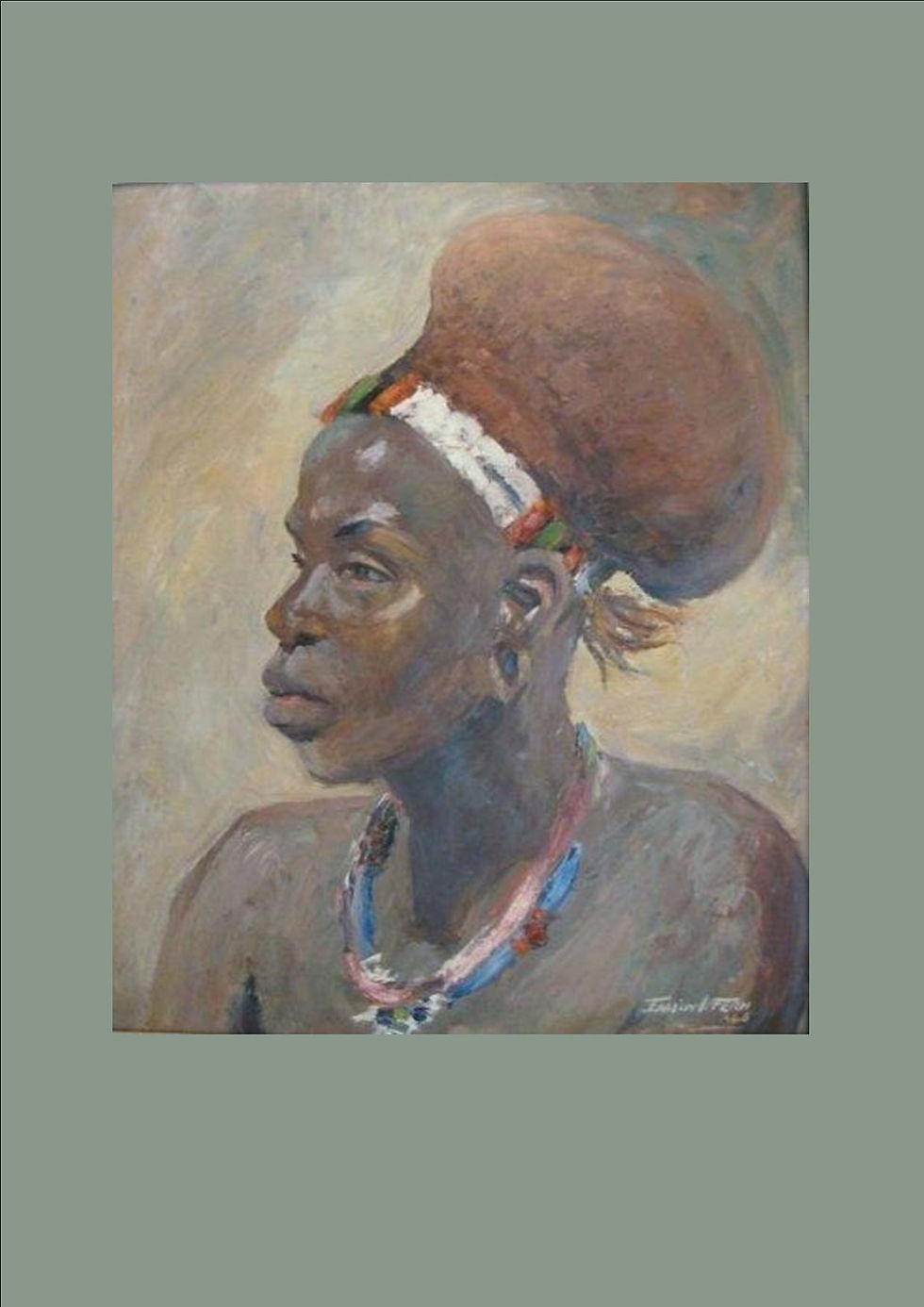
Oil on canvas Signed 32 x 39 cm
Oil on canvas Signed 32 x 39 cm

Oil on board 44 cm x 45 cm
Oil on board 44 cm x 45 cm

Oil on Canvas Dated 2012 75 cm x 57cm
Oil on Canvas Dated 2012 75 cm x 57cm

Oil Signed .Titled 88 x 120 cm
Oil Signed .Titled 88 x 120 cm

Mixed Media and Collage on canvas Signed Dated 16 163 cm x 160 cm
Mixed Media and Collage on canvas Signed Dated 16 163 cm x 160 cm
Mixed Media and Collage on canvas Signed Dated 16 163 cm x 160 cm

Oil on canvas Signed 53 x 106 cm

Acrylic on Board Signed 44 cm x 40 cm
Acrylic on Board Signed 44 cm x 40 cm

Colour Pencil on Paper Signed 16 cm x 11 cm
High Fired Pottery 27.5 cm x 18.7 cm x 18.7 cm

Signed Oil 24 cm x 35 cm
Contemporary South African Art
Sage, Amanda
Amanda Sage is an artist driven to contribute to the development of regenerative culture by using painting as a tool for transformation within the individual and collective.
Her paintings represent multidimensional aspects of humanness in harmonious balance, inspiring a re-membering of an energetic inter-connectedness that is present and shared with all things.
In 1997 she apprenticed for 2 years in classical painting techniques with Michael Fuchs in Vienna Austria. This led to becoming a painting assistant to Ernst Fuchs, founder of Fantastic Realism, for 10 years while developing her own style and portfolio as a resident artist at the culture house WUK in Vienna.
Since 2009 she has been based in Los Angeles and influential in networking artists and initiatives while hosting workshops, lecturing and exhibiting worldwide. Her work is mostly in private collections with some pieces also in the permanent collection of the Kirkland Museum in Denver, Colorado. In 2021 she contributed to a collaborative project with Meow Wolf Las Vegas and opened her first solo museum exhibit at the Mesa Contemporary Art Museum in Arizona.
In 2014 together with designer Shabnam Q, the 'Amanda Sage Collection' was launched online. An independent fashion label leading the frontier of visionary art and fashion. "Wearable visionary art, made with love from threads of light".
She is on the board of directors of CoSM (Chapel of Sacred Mirrors) Alex & Allyson Grey’s art sanctuary in New York where she also leads annual painting intensives with her partner Joe Bob Merritt. They have also pioneered painting retreats in Eco-Villages such as Paradise One, Byron Bay Australia and Punta Mona, Costa Rica. She was instrumental in initiating the Vienna Academy of Visionary Art in 2012 and in 2022 opened the ViTra Academy online with her colleague Alecia Sacred Heart.
Since 2011 she has had an obsession with Trains, seeing them as vehicles of transformation capable of carrying the creative genius of humanity back on the tracks that brought imperialist civilization to the end of the western frontier, on a journey of healing and remembrance of our inter-connectivity with all of life.
On March 24th, 2020 she launched the Non-Stop Vision Train Global Art Jam on Zoom with a collective of her students from all over the world. With the intention to strengthen community and create a supportive environment where artists could be alone together and encourage each other to go deeper with their work than ever before.
When not traveling she can be found in one of her studios in Los Angeles, Vienna Austria or Gunnison Colorado.

Acrylic on Canvas 40.64 x 50.8 cm
Mysterious Admirer
Vladimir Tretchikoff's legendary 'Lady of the Orchids' has elusively resurfaced in Switzerland.
One of the most significant paintings of Vladimir Tretchikoff will be sold on 16 December by Swiss auction house Schuler in Zurich. Titled Lady of the Orchids, it is estimated at R870,000 - R1,160,000 (CHF 60'000 - 80'000).
The story goes that Tretchikoff, who grew up in China, spent the most romantic period of his life in Jakarta during World War II. After a spell as a Japanese prisoner-of-war, he was released by the occupation authorities and allowed to pursue his artistic carrer in Java.
One Day, an anonymous admirer sent him a box of orchids. Those flowers, ten times as expensive as roses, were an exorbitant present in a city where everybody eked out the little money they had just to survive. For a few months, Tretchikoff received orchids twice every week. They were so many that they filled the house. The identity of the sender remained a mystery. The shop that delivered the flowers refused to reveal the buyer's name. Tretchikoff regarded these gifts as an encouragement to continue painting. "Somebody evidently had faith in me", he remembered. "And it grew to mean so very much, when all around was desolation, poverty and suffering". He imagined his mysterious benefactor as a woman. With each new picture he produced, he wondered if she would like it. The sitter for Lady of the Orchids was Leonora Moltema-Salomonson. Half-Indonesian and half-Dutch. Leonora - or Lenka as Tretchikfoff affectionatley called her - for him, embodied "that intricate blend of the East and West, the mixing of women". Although in Java's strong Muslim traditions nudity was seen as taboo, Leonara posed semi-naked for the painting. According to Boris Gorelik, it is one of Tretchikoff's best paintings from his Havanese period. Leonara's unflinching belief in his esuccess helped Tretchikoff to perservere. His model and lover, she urged him not to sell his paintings so that he would be able to hold an exhibition after the war.
On his departure from Java in 1945, Tretchikoff took his Javanese canvases away with him. Again the Lady of Orchids was a rare exception, as the grandfather of the present owner, a Swiss who had moved to Java to work for a Dutch company bought it directly from the artistin order to support him. The legendary Lady of the Orchids has been in possession of the same family for three generations. Unlike other exceptional Tretchikoff canvases, it has never been exhibited or reproduced before.
The Forest Fire
The only known landscapes by Tretchikoff are his depictions of Cape mountain wildfires. In 1948, shortly after settling in South Africa, Tretchikoff held the first of his many exceedingly popular exhibitions in Cape Town and Johannesburg. In commercial terms, he soon became the country’s most successful artist. Half the works that Tretchikoff presented that year were produced in Indonesia, where he had been working during World War II, but in 1949, the Russian-born artist decided that the theme for his shows would be South Africa, his newly-adopted country. Not only was the subject matter purely South African, he even made use of indigenous materials in The Forest Fire and other works.
With his interest in the mysteries of death and resurrection and his penchant for intense colours, Tretchikoff was awed by the drama of Cape wildfires. In his work, flames usually represent the ultimate destructive force. This is evident in his most dramatic paintings – Atomic Age and The Atom – where raging fire spells the end of humanity. But Tretchikoff saw death as a new beginning. As in his often-reproduced Lost Orchid and Weeping Rose, when something beautiful perishes, a new life is bound to emerge in its place. No wonder that, in another canvas from the same series, The Spring, we see daisies sprouting through cracks in the dry soil among the blackened trunks of fallen trees after a blaze.
The frame for The Forest Fire was designed and crafted by Tretchikoff personally. He bought heavy blocks of Cape pine, which he transported to his studio in his car. He stripped off the bark, which timber merchants usually discard, trying not to break the brown gnarled surface. He then cut a rectangular hole in the large pieces of bark and used them to frame his Cape wildfire landscapes.
The Forest Fire was purchased by a sheep farmer from the Karoo, who bought several other works by Tretchikoff as well as paintings by Frans Oerder, Tinus de Jongh, Vernon Ward and Sir Russell Flint. The buyer was prompted by his seven-year-old daughter who accompanied him to Tretchikoff's studio. When he asked her which was her favourite painting, she pointed to The Forest Fire. The canvas has been in the family ever since.
Boris Gorelik