
Oil on canvas Signed 53 x 106 cm
Oil on canvas Signed 53 x 106 cm
Oil on canvas Signed 53 x 106 cm
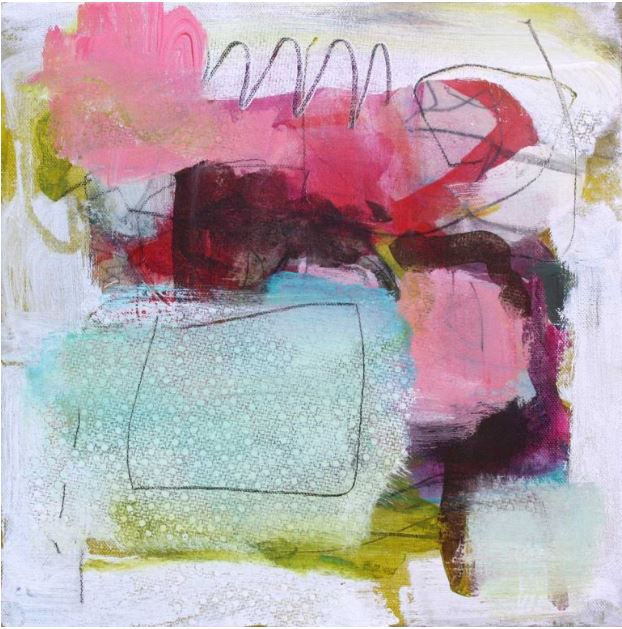
Acrylic on canvas 30.5 x 30.5 cm
Acrylic on canvas 30.5 x 30.5 cm
Acrylic on canvas 30.5 x 30.5 cm
Acrylic on canvas 30.5 x 30.5 cm
Acrylic on canvas 30.5 x 30.5 cm
Oil on canvas Signed 53 x 106 cm

Oil on Canvas 47.6 x 48.3 cm
Oil on Canvas 47.6 x 48.3 cm

Gouache on Paper 75 x 55 cm

Gouache on Paper 75 x 55 cm
Gouache on Paper 75 x 55 cm
Gouache on Paper 75 x 55 cm

Acrylic on Canvas 91.4 cm x 61 cm Signed lower right; titled and dated verso; unframed
Acrylic on Canvas 91.4 cm x 61 cm Signed lower right; titled and dated verso; unframed
Acrylic on Canvas 91.4 cm x 61 cm Signed lower right; titled and dated verso; unframed
Acrylic on Canvas 91.4 cm x 61 cm Signed lower right; titled and dated verso; unframed

Acrylic on Canvas 91.4 cm x 61 cm Dated 1996 Signed lower right, Titled and dated verso, Unframed
Northwest Coast
Inuit Sculpture Artist Unknown

Sedna Soapstone
Sedna Soapstone

High Fired Pottery 27.5 cm x 18.7 cm x 18.7 cm

Acrylic Painted Skull 44 cm x 20 cm

Oil on canvas Signed; Numbered 12-06 76 x 58 cm
Oil on canvas Signed; Numbered 12-06 76 x 58 cm
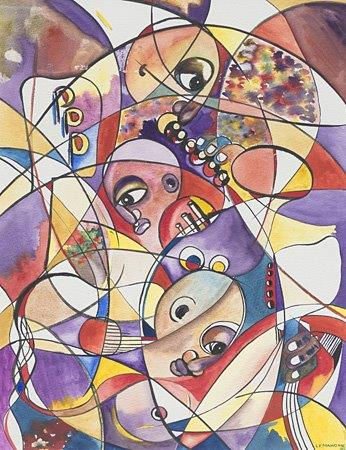
Watercolor Signed Dated 1993 36 x 28cm
Watercolor Signed Dated 1993 36 x 28cm
Watercolor Signed Dated 1993 36 x 28cm
Watercolor Signed Dated 1993 36 x 28cm

Rosewood Tables 78 cm x 150 cm x 54.5 cm
Rosewood Tables 78 cm x 150 cm x 54.5 cm
Rosewood Tables 78 cm x 150 cm x 54.5 cm
Rosewood Tables 78 cm x 150 cm x 54.5 cm
Rosewood Tables 78 cm x 150 cm x 54.5 cm
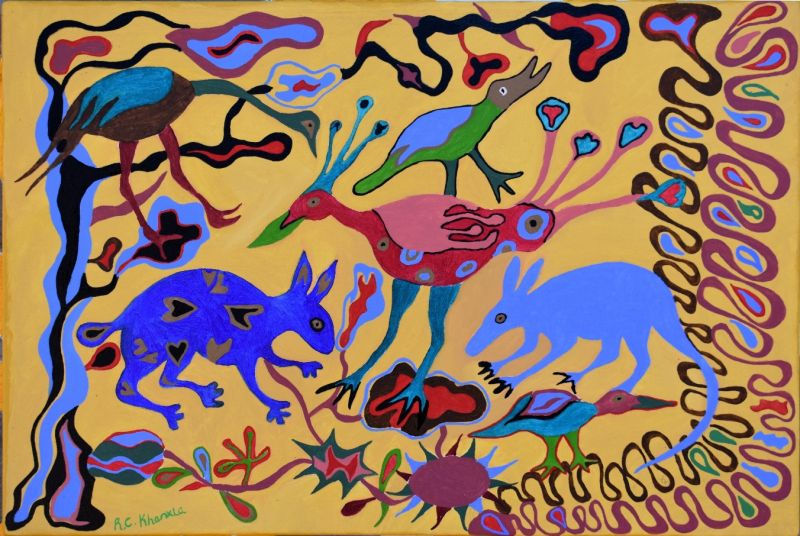
Oil on canvas 57.2 x 85.5 cm

Oil on Board Signed Dated 1962 90 cm x 65 cm
Oil on Board Signed Dated 1962 90 cm x 65 cm

Coloured pencil on paper 24.1 x 18.4 cm 2015
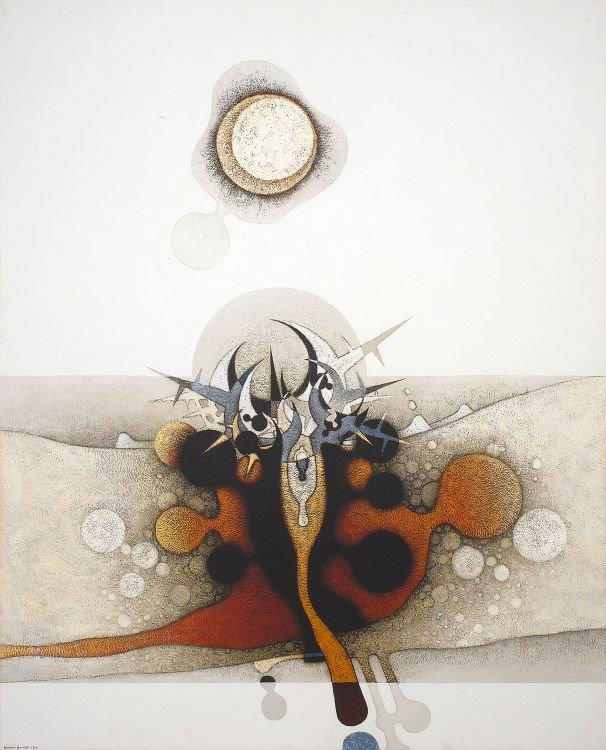
Sunburst Mixed Media on Board 122.5 x 99 cm
Sunburst Mixed Media on Board 122.5 x 99 cm
Bobbie Burgers
Bobbie Burgers is a contemporary Canadian painter. Her lush and Expressionistic depictions of flowers teeter on the verge of abstraction, bursting with bright color and laden with thickly applied, textural paint. “Flowers, to me, are the opposite of still,” the artist has explained. “Changing from minute to minute, they are perfect symbols for life, death, yearning, and beauty. My brushstrokes are layered with my own internal charges, depicting anger, frustration, softness, wanting, and more.” Born in 1973 in Vancouver, Canada, she studied Art History at the University of Victoria in British Columbia. Her work has been exhibited widely at home and abroad, notably including Art Market San Francisco and Equinox Gallery. Today, her works are in the collections of the Berost Corporation in Toronto and the Royal Bank of Canada, among others. Burgers lives and works in Vancouver, Canada.
Bobbie Burgers
Bobbie Burgers is a contemporary Canadian painter. Her lush and Expressionistic depictions of flowers teeter on the verge of abstraction, bursting with bright color and laden with thickly applied, textural paint. “Flowers, to me, are the opposite of still,” the artist has explained. “Changing from minute to minute, they are perfect symbols for life, death, yearning, and beauty. My brushstrokes are layered with my own internal charges, depicting anger, frustration, softness, wanting, and more.” Born in 1973 in Vancouver, Canada, she studied Art History at the University of Victoria in British Columbia. Her work has been exhibited widely at home and abroad, notably including Art Market San Francisco and Equinox Gallery. Today, her works are in the collections of the Berost Corporation in Toronto and the Royal Bank of Canada, among others. Burgers lives and works in Vancouver, Canada.
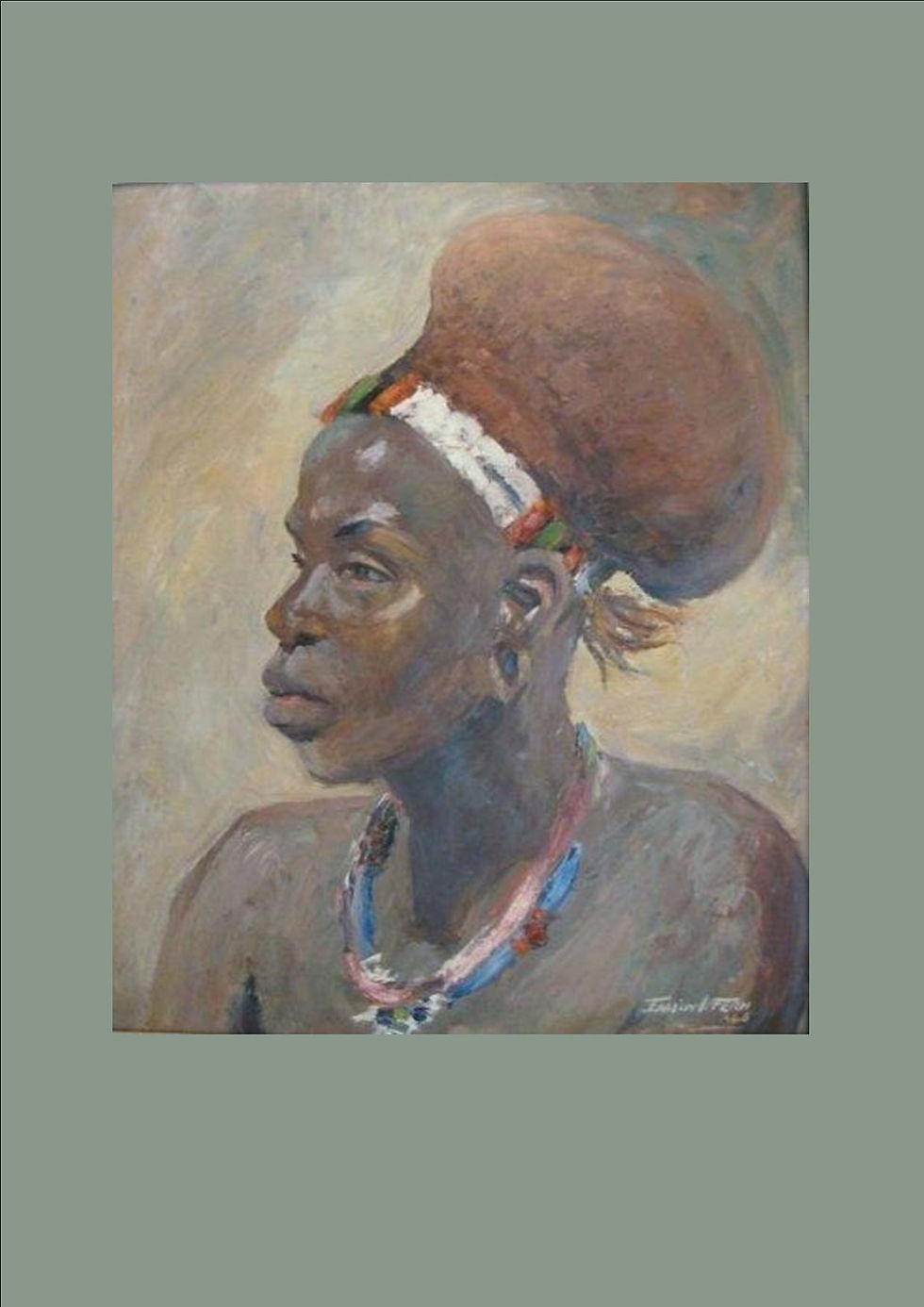
Oil on canvas Signed 32 x 39 cm
Oil on canvas Signed 32 x 39 cm

Oil on board 44 cm x 45 cm
Oil on board 44 cm x 45 cm

Oil on Canvas Dated 2012 75 cm x 57cm
Oil on Canvas Dated 2012 75 cm x 57cm

Oil Signed .Titled 88 x 120 cm
Oil Signed .Titled 88 x 120 cm

Mixed Media and Collage on canvas Signed Dated 16 163 cm x 160 cm
Mixed Media and Collage on canvas Signed Dated 16 163 cm x 160 cm
Mixed Media and Collage on canvas Signed Dated 16 163 cm x 160 cm

Oil on canvas Signed 53 x 106 cm

Acrylic on Board Signed 44 cm x 40 cm
Acrylic on Board Signed 44 cm x 40 cm

Colour Pencil on Paper Signed 16 cm x 11 cm
High Fired Pottery 27.5 cm x 18.7 cm x 18.7 cm

Signed Oil 24 cm x 35 cm
Contemporary South African Art
Breytenbach, Breyten
A South African writer and painter with French citizenship, considered the finest Afrikaner poet.
Studies: Studied Fine Arts at the University of Cape Town, before leaving the country in 1959.Profile: Breytenbach, who was part of the team that started the Centre for Creative Arts, has also held numerous visiting professor posts, including University of Natal, Princeton University, New York University and the University of Cape Town, and has also been awarded honorary doctorates by the University of Cape Town and the University of Natal.
Exhibitions: In 1964 he showed his pictures in his first exhibition at the Galerie Espace in Amsterdam. Breyten Breytenbach has also gained reputation internationally for his paintings, many of which portray surreal animal and human figures, often in captivity. His foremost surrealist paintings were exhibited in Johannesburg, Cape Town, Hongkong, Amsterdam, Stockholm, Paris, Brussels, Edinburgh, and New York, among other cities.
References: African Success : Biography of Breyten BREYTENBACH www.africansuccess.org/visuFiche.php?lang=en&id=705
Breyten Breytenbach artist portrait - culturebase.netwww.culturebase.net/artist.php?147
Breyten Breytenbach www.stellenboschwriters.com/breyten.html
Breyten Breytenbach was born in Bonnievale, Western Cape, approximately 180 km from Cape Town and 100 km from the southernmost tip of Africa at Cape Agulhas.
He studied fine arts at the University of Cape Town
and became a committed opponent of the policy of apartheid. He left South Africa for Paris in the early 1960s. When he married a French woman of Vietnamese ancestry, Yolande, he was not allowed to return:
The Prohibition of Mixed Marriages Act (1949) and
The Immorality Act (1950) made it a criminal offence for
a white person to have any sexual relations with a person
of a different race.
In France he was a founder member of Okhela, a resistance group fighting apartheid in exile. On an illegal trip to South Africa in 1975 he was betrayed (by the ANC who mistrusted him), arrested and sentenced to seven years of imprisonment for high treason: his work The True Confessions of an Albino Terrorist describes aspects of
his imprisonment. Released in 1982 as a result of massive international intervention he returned to Paris and obtained French citizenship.
He currently divides his time between Europe, Africa, and the United States. He joined the University of Cape Town as a visiting professor in the Graduate School of Humanities (from January 2000) and is also involved with the Gorée Institute in Dakar (Senegal) and with New York University, where he teaches in the Graduate Creative Writing Program.
The work of Breytenbach includes numerous volumes of poetry, novels, and essays, many of which are in Afrikaans, many translated from Afrikaans to English, and many published originally in English. He is also known for his works of pictorial arts. Exhibitions of his paintings and prints were shown in numerous cities around the world including Johannesburg, Cape Town, Hong Kong, Amsterdam, Stockholm, Paris, Brussels, Edinburgh and New York.
Breytenbach was described as the only example of a "nice South African" in the song I've Never Met A Nice South African. The song was written by John Lloyd for the satirical British TV series, Spitting Image.
Breytenbach is a judge for the 2013 Griffin Poetry Prize. He is the brother of Jan Breytenbach, founder of the South African Special Forces, and Cloete Breytenbach, a widely published war correspondent.

Colour Screenprint and Pencil Crayon Image Inscribed Printed Title 49 cm x 68 cm

Oil on Board Signed 1975 44 cm x 30.5 cm

Watercolor Signed, dated 1993 - inscribed with title 98.5 x 68.5 cm

Mixed Media on Cardboard Signed & Dated 2001 100 cm x 75 cm
Best known for his lyrical poetry and his erstwhile political activism, Breyten Breytenbach is also an accomplished fine artist in his own right. He has mounted exhibitions all over the world and his paintings appear on most of his poetry anthologies. Occasionally, however, he combines his poems and his paintings into one new art work, such as in the case of the present lot. "Painted words are nothing else but meaningful images", he once said.
One such example is Boekdoek/Lappasait, exhibited at the Frans Hals Museum in Haarlem, in the Netherlands. Words and images are combined in ten elongated pieces of fabric, referencing Tibetan paper prayers, mandalas with formulas and figures used for meditation purposes, as well as Chinese scrolls, often depicting landscapes and by implication, travels, with poems written in fine calligraphy. These pieces of fabric can easily be rolled up and unfurled at any new site the poet wanted to camp out next. They essentially serve as textbooks or roadmaps or even an inventory of his whole life.
The present lot, a self-portrait, is another telling example of his practice of combining word and image. Words spring directly from his heart: he proclaims himself as emperor of the whole of North Africa, from upper Egypt to Faiyum in middle-Egypt. This portrait, incidentally, references the famous Faiyum funereal portrait tradition. This braggart, however, is of course just making fun of a gullible reader/viewer; he is essentially a poet, a word artist, a ‘’catcher of the elusive wind’’, enjoying word puns, alliteration and assonance that any language enables a creative person to invent. He is also the prodigal son, returning from voluntary exile, an outsider speaking in a Cape Flat vernacular, rather than the standard Afrikaans. Only one poem ‘’Koong Byten 1’’ in his latest anthology, The Wind Catcher (2007) has a similar subject matter and is also composed in this vernacular. In this poem he unashamedly declares himself ‘’King of Paradise’’.
Breytenbach lures the reader/viewer into saying the words out aloud, into repeating this mantra, straight from his heart, with him and in this manner, the reader/viewer becomes part of the art work itself and completes the creative process that Breytenbach has set in motion.
Ref: https://www.straussart.co.za/auctions/lot/5-mar-2018/508#view

Ogi Fly Dust compound 1968 Oil on Canvas 130 x 130 cm

Watercolour Signed 64 x 44 cm

Mixed Media on paper 50 cm x 34 cm Signed Dated 1995 Dezwaan April 2021

Watercolor Signed 1987 32 cm x 23 cm
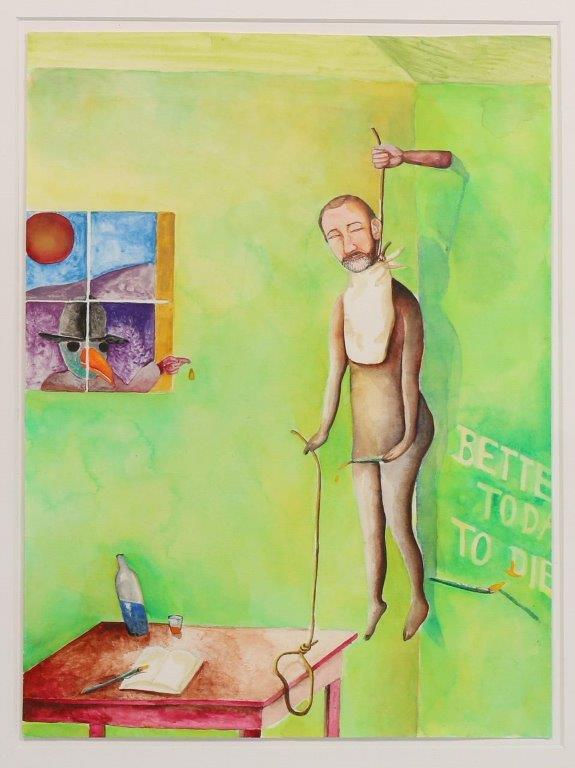
Watercolor 31 cm x 24 cm Signed 1987

Mixed Media on Paper 57 cm x 34.5 cm